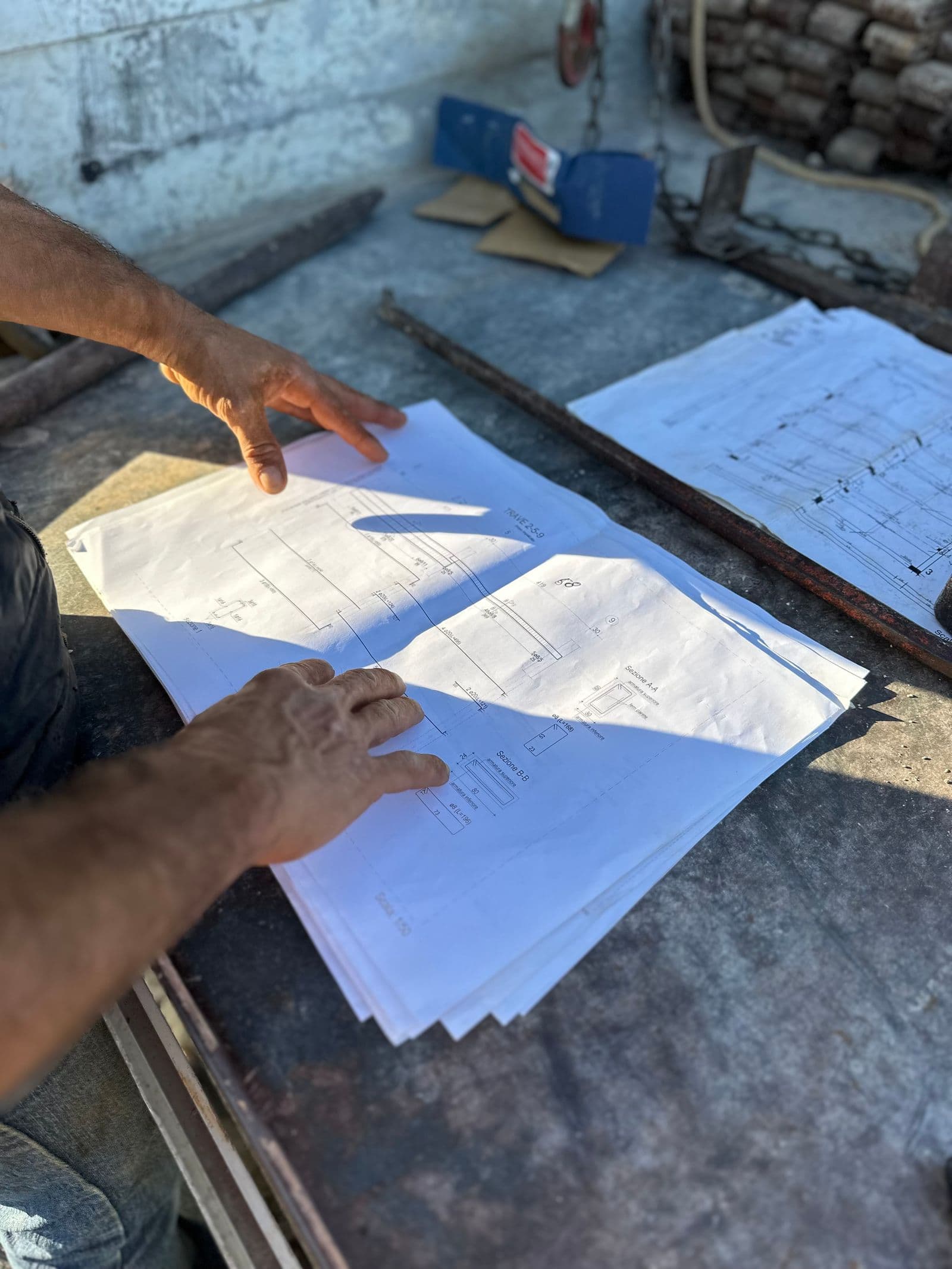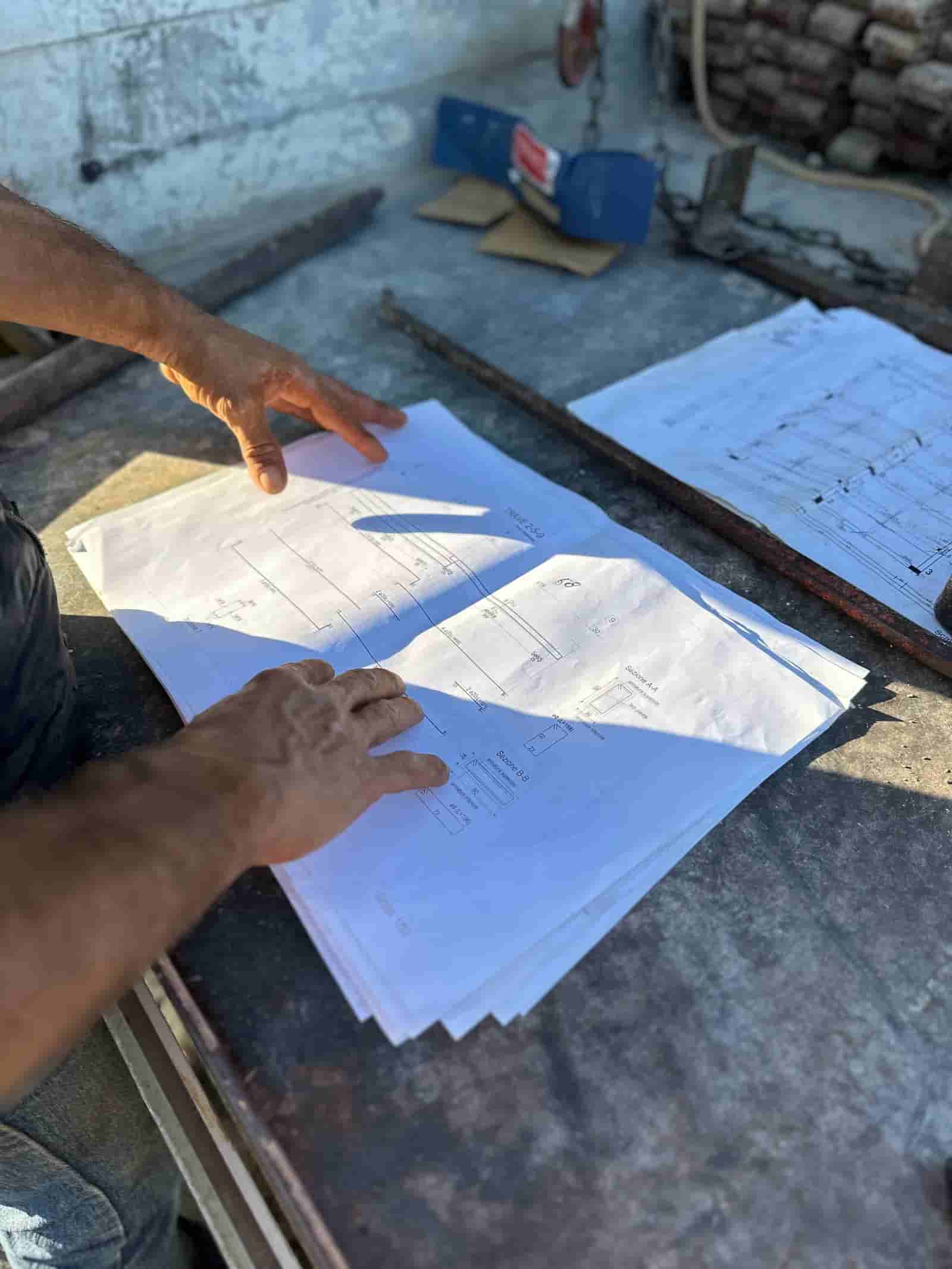
Certified payroll is where small errors get expensive. A worker coded to the wrong classification, a base rate a few cents under the schedule, a fringe credit applied the wrong way, and a weekly report can come back rejected or, worse, surface in an audit months later. The work itself is not hard. It is repetitive matching across timecards, wage determinations, union agreements, and the WH-347 format, repeated every week across every prevailing wage job. That repetition is exactly what AI is good at, and exactly where a payroll specialist's time is wasted. The point of AI here is not to certify payroll for you. It is to do the lookups, the cross-checks, and the formatting, then hand a clean draft to a person who verifies and signs.
What does certified payroll actually require?
On most federally funded and many state and local public projects, contractors and subcontractors must submit a weekly certified payroll report, commonly the federal WH-347 or a state equivalent. Each report lists every worker on the project, their classification, hours worked, the rate paid, fringe benefits, deductions, and net pay, and it carries a signed statement of compliance. The rates and fringes are not arbitrary. They come from the wage determination that applies to the project's location and work type under the Davis-Bacon and Related Acts, and on union jobs they interact with the rates and fringe contributions set in the collective bargaining agreement.
The compliance burden is the sum of many small judgments. Is this worker a laborer, an operator, or a carpenter for the hours they actually worked? Does the rate paid meet or exceed the determination for that classification? Were fringes paid in cash, contributed to a plan, or split, and does the total still clear the required amount? Did anyone cross trades mid-week and need split classifications? AI can prepare answers to all of these. The payroll team decides whether each one is right.
How does AI classify workers and validate rates?
Start with classification, because everything downstream depends on it. AI reads the timecards, the job's labor records, and any notes from the field, then proposes a classification for each worker for each set of hours. It maps that proposed classification to the line on the applicable wage determination and pulls the required base rate and fringe amount. When a worker performed more than one type of work in a week, it flags the hours that may need a split classification rather than guessing a single code.
Rate validation is a direct comparison once classification is settled. The AI takes the rate actually paid from your payroll data and checks it against the required base rate for that classification on that determination. If the paid rate is below the floor, it flags the shortfall with the numbers side by side. It does the same for overtime, applying the rules that govern how prevailing wage overtime is calculated. None of this is a black box. Every flag points back to the source document, the timecard line, and the wage determination row, so a reviewer can confirm in seconds instead of rebuilding the lookup by hand.
How are fringe benefits allocated and checked?
Fringes are where certified payroll gets technical, and where manual processing slips most often. The required fringe can be satisfied in cash added to the paycheck, through bona fide benefit plan contributions, or a combination, and the math has to prove the total meets the determination. On union jobs, the collective bargaining agreement sets specific contribution amounts to health, pension, training, and other funds, and those have to be reflected correctly.
AI allocates fringes against the requirement and shows the work. It takes the cash and plan contributions from your records, sums them per worker per classification, and compares the total to the required fringe on the determination. Where a union agreement applies, it references the contribution rates in that agreement so the reported fringes line up with what was actually owed and paid. If cash plus contributions falls short, it flags the gap. If the allocation looks complete, it carries the figures into the report. The payroll team still owns the call on how fringes were treated, because that often depends on plan details and policy the AI should not assume.
A worked example: one week, one prevailing wage job
Here is how a single weekly cycle runs in practice. Treat the names and numbers as illustrative.
- What goes in: the week's approved timecards for the Riverside Avenue job, the payroll register from your payroll system, the wage determination on file for the project, and the relevant collective bargaining agreement for the union trades.
- What the AI does first: it reads each worker's hours and proposes a classification. It codes most of the crew cleanly, then flags that one worker logged eight hours operating equipment and twenty-four hours of general labor, suggesting a split between operator and laborer for those hours.
- What the AI checks next: for every worker and classification, it compares the paid base rate to the determination. It surfaces one laborer paid eleven cents below the required base rate and shows both figures with the source rows.
- What the AI does with fringes: it sums cash and plan contributions per worker, compares to the required fringe, and references the union agreement for the trades it covers. It confirms most are fully funded and flags one apprentice whose fringe contribution needs a second look against the apprenticeship rate.
- What the AI assembles: a populated WH-347 with the statement of compliance attached, plus an exceptions list naming the split classification, the underpaid laborer, and the apprentice fringe.
- What the human checks: the payroll specialist reviews the three exceptions, corrects the underpayment, confirms the split, resolves the apprentice fringe, then verifies the totals and signs the certification. The clean report goes out; the corrected one is reissued.
The week's manual effort drops from rebuilding every lookup to reviewing a short exceptions list, and the certification still carries a person's signature and judgment.
Where does this fit with your existing payroll tools?
AI for certified payroll is not a payroll system, and it does not replace one. Your hours are still captured where they are captured, and pay is still run where it is run. The AI sits on top, reading the outputs you already produce and the wage determinations and union agreements you already hold, then doing the classification, validation, allocation, and report assembly that currently eats hours of specialist time. The same back-office pattern applies across construction finance work; if invoice and voucher handling is also manual for your team, see Ruh AP and back-office automation for the adjacent workflow.
Because Ruh runs in your tenant on your documents, the sensitive material never leaves your environment to make this work. Your timecards, pay rates, benefit details, and bargaining agreements stay where they are. The AI reads them in place, produces drafts and flags, and leaves a clear trail back to every source it used.
What stays with the payroll team?
Judgment and sign-off stay human, by design. The AI proposes classifications; the payroll specialist confirms them. The AI flags a rate shortfall; a person decides the correction and how to remedy it. The AI allocates fringes; the team confirms the treatment against plan and policy. The statement of compliance is signed by a person who has reviewed the report, because that signature carries legal weight and the responsibility behind it cannot be delegated to software.
What changes is the starting point. Instead of a blank WH-347 and a stack of source documents, the team starts from a populated draft with the questionable items already isolated. Review replaces reconstruction. The work that requires a human, deciding whether a classification is right and a payment is compliant, gets the team's full attention, and the work that does not, the lookups and the formatting, gets done before they sit down.
If you run prevailing wage jobs, the weekly certified payroll grind is predictable and rule-bound, which is what makes it a good fit for AI assistance rather than AI authority. Let the system handle the matching against wage determinations and union agreements, the fringe math, and the WH-347 assembly, and keep your specialists focused on the exceptions and the certification. Start with one active Davis-Bacon job, run a few weeks in parallel against your current process, and judge it on whether the flags it raises are the ones you would have caught and the ones you would have missed. The goal is a faster path to a report you can stand behind, with your signature on it.
Why teams trust Ruh with this
The two reasons construction teams hesitate on AI are accuracy and data security. Ruh runs in your own tenant on your documents, every output is traceable and reviewed by your team before it is used, and the work is backed by a money-back guarantee. The AI does the heavy lifting, your people keep the judgment and the sign-off.
Try Ruh on a real bid. 100% money-back guarantee if you are not satisfied.*
*Scoped delivery, terms apply. Read the guarantee terms
Ready to go deeper? see Ruh AP and back-office automation.
Frequently asked questions
How accurate is the AI at classifying workers and validating rates?+
Accuracy depends on the quality of your source records, which is why the system never certifies on its own. It proposes a classification and rate check for every worker and ties each one back to the exact timecard line and wage determination row it used, so a reviewer can confirm or correct in seconds. Anything it is unsure about, like split classifications or borderline fringes, is flagged rather than buried. The payroll specialist still verifies and signs, so the certification reflects human judgment, not a model's guess.
Is our payroll and employee data secure?+
Ruh runs inside your own tenant on your own documents. Your timecards, pay rates, benefit details, and collective bargaining agreements stay in your environment; the AI reads them in place to produce drafts and flags. Nothing has to be exported to a third party to make the workflow function, and every output keeps a trail back to the source records it used.
Do we have to replace our current payroll system?+
No. This is not a payroll system and does not run pay. Hours are still captured where you capture them and pay is still run where you run it. The AI sits on top, reading the outputs you already produce plus the wage determinations and union agreements you already hold, then doing classification, rate validation, fringe allocation, and WH-347 assembly. It fits alongside your existing tools rather than displacing them.
What still has to be done by a person?+
Judgment and sign-off stay human. People confirm classifications, decide how to remedy a rate shortfall, confirm fringe treatment against plan and policy, and sign the statement of compliance. The AI changes the starting point from a blank form and a stack of documents to a populated draft with the questionable items isolated, so the team reviews exceptions instead of rebuilding every lookup.
Does it handle both Davis-Bacon and union prevailing wage jobs?+
Yes. It validates against the wage determination that applies under Davis-Bacon and Related Acts for the project's location and work type, and where a collective bargaining agreement applies it references that agreement's rates and fringe contributions. On jobs where both interact, it surfaces the figures side by side so the payroll team can confirm the reported rates and fringes match what was actually owed and paid.
Reading about it is slower than watching it. 30 minutes, your data, your team in the room.
Book a demoFigures on this page are illustrative. Construction estimates depend on project-specific conditions, source documents, market pricing, and professional judgment. Ruh's AI assists the estimator and does not replace professional review: your team reviews, validates, and approves every estimate, bid, and pricing decision.