
The takeoff, in plain terms
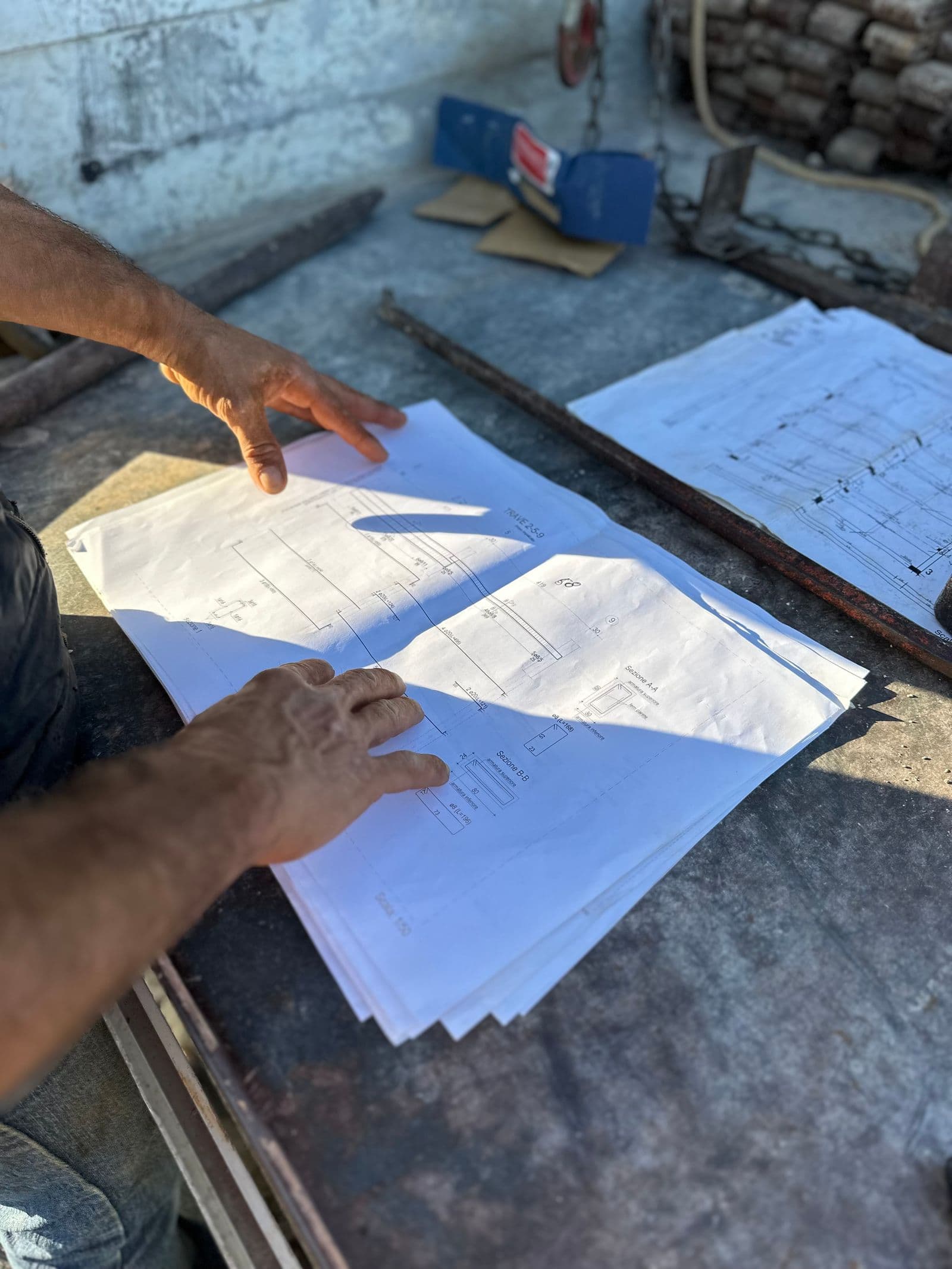
Before anyone can price a job, someone has to answer a simple question: how much work is actually on these drawings? The takeoff is that answer. Working through the plan set, the estimator counts what can be counted and measures what must be measured, producing a structured list of quantities. Only after that list exists can unit prices, labor rates, and markups turn it into a bid.
The takeoff is the foundation of the estimate in a literal sense: every dollar in the bid sits on top of a quantity. Get the quantities wrong and no amount of clever pricing rescues the number.
Quantity takeoff vs material takeoff
The two terms get used interchangeably, with a real distinction underneath. A quantity takeoff measures all work items, whether or not a material is purchased: demolition by the sf, excavation by the cy, finishing labor by the sf. A material takeoff is the purchasing view: the studs, sheets, yards, and fixtures that will actually be bought, often with waste factors already applied so the list can go straight to a supplier for quotes.
On most commercial bids the estimator produces the quantity takeoff, and the material takeoff falls out of it for the scopes being self-performed. The material take off (MTO) guide walks that conversion step by step, from measured quantities to purchasable units.
What gets counted and what gets measured
Takeoff quantities come in four measurement types, and knowing which applies is half the craft:
- Count (each): doors, fixtures, columns, connections. Pulled from schedules and plan symbols. A door schedule listing 14 doors is a takeoff line of 14 ea.
- Length (lf): walls, pipe, conduit, baseboard, footings. Measured along the run in linear feet. A 240 ft partition run is 240 lf, regardless of height; height enters when length converts to area.
- Area (sf, sy, squares): flooring, drywall, paint, roofing. Floor finishes price by the sf or square yard, roofing by the square (100 sf). A 2,400 sf roof is 24 squares.
- Volume (cy): concrete, excavation, fill. Plan area times thickness gives cubic feet, divided by 27 gives cubic yards.
Weight rounds out the set for structural steel and rebar (tons), and lumber adds its own unit, the board foot, for framing packages.
Per trade, the pattern repeats: electricians count devices and measure conduit runs, plumbers count fixtures and measure pipe, concrete subs measure volumes and form areas, drywallers convert wall lengths and heights into sheet counts. The units differ; the discipline is identical.
The manual process, step by step
A traditional takeoff from a printed or PDF set runs like this:
- Stage the documents. Confirm you hold the latest revision and every addendum. Note the scale on each sheet and verify it against a written dimension string before trusting it.
- Work one system at a time. Pick a trade or CSI division, sweep the relevant sheets, and quantify everything in that system before moving on. Jumping between systems is how items get missed or counted twice.
- Record with traceability. Every quantity gets a sheet reference. The line reads 240 lf interior partition, A-201, not just 240.
- Convert units as the work demands. Wall lf times height gives sf of drywall; both faces doubles it; slab sf times thickness over 27 gives cy of concrete.
- Apply waste factors. Cuts, breakage, and spillage are real. Typical allowances run 5 to 15 percent depending on material and layout complexity, calibrated from your own job history.
- Summarize for pricing. Roll the quantities into the estimate structure (by division or cost code) where unit costs will extend them into dollars.
A worked fragment shows the texture. A tenant space needs new partitions: the plan shows runs totaling 240 lf at 9 ft ceiling height. Drywall area: 240 x 9 = 2,160 sf per face, 4,320 sf both faces. Waste at 10 percent: 4,320 x 1.10 = 4,752 sf. Sheets, if buying 4x12s (48 sf each): 4,752 / 48 = 99 sheets. One measured length just became a purchasable, priceable package.
On-screen takeoff
Digital takeoff replaced the scale ruler with a cursor: load the PDF set, calibrate the scale, then click to count and trace to measure while the software accumulates totals. It is faster than paper, eliminates scale arithmetic, keeps a visual audit trail of what was measured, and recalculates instantly when an addendum changes a dimension. What it does not do is decide what to measure. The estimator still drives every click, which is why a large set still consumes days.
How AI takeoff works
AI takeoff moves the measuring itself to the machine. The system reads the drawing set, identifies the elements (walls, doors, slabs, fixtures), measures and counts them, and drafts the quantity list with each item traceable back to its sheet, the same standard a human takeoff is held to. Ruh takes it one step further down the workflow: the drafted quantities are priced immediately against your own price book, your real unit costs rather than a generic database, producing a line-item draft estimate instead of a bare quantity list.
The estimator's role shifts rather than shrinks: verify the scope boundaries, spot-check quantities against the drawings, set the waste factors and means and methods, and sign off. The measuring hours compress; the judgment hours stay. Teams use the recovered time to bid more work or to chase the scope details that win and protect margin. That workflow is the core of AI construction takeoff and estimating software, and it pairs with the full pricing discipline covered in how to estimate construction costs.
Accuracy habits that separate professionals
Whatever the tooling, the same habits protect the takeoff. Verify scale before measuring anything, and re-verify on sheets that were reissued. Check addenda twice: once for changed drawings, once for changed scope language in the specs. Apply waste factors deliberately and consistently, never twice. Reconcile schedules against plans (the door schedule and the floor plan disagree more often than anyone admits). And keep every quantity traceable, because a number you cannot trace is a number you cannot defend in a bid review or a dispute.
A takeoff done this way is more than an input to one estimate. It becomes the quantity backbone for buyout, for the schedule of values, and for checking subcontractor proposals, paying for its rigor several times over the life of the job.
Try Ruh on a real bid. 100% money-back guarantee if you are not satisfied.*
*Scoped delivery, terms apply. Read the guarantee terms
Frequently asked questions
Why is it called a takeoff?+
The estimator takes the quantities off the drawings, and the name stuck. You will also see it written as take-off or takeoff sheet, and abbreviated QTO for quantity takeoff or MTO for material takeoff. All describe the same activity: converting drawings into measured quantities.
What is the difference between a quantity takeoff and a material takeoff?+
A quantity takeoff measures all work items including labor-only scopes like demolition or finishing, while a material takeoff lists only the physical materials to be purchased. In daily use the terms overlap, and most estimators simply say takeoff and mean the complete quantity survey.
How accurate does a takeoff need to be?+
Accurate enough that pricing errors come from rates, not quantities. Every percent of quantity error multiplies straight through the estimate, which is why takeoffs get a second-person check on bid work and why traceability (every quantity tied to a sheet number) is the professional standard.
How long does a manual takeoff take?+
It is usually the single largest block of time in producing a detailed estimate, and it scales with the size of the drawing set. That time pressure is the main reason teams move from manual measurement to on-screen takeoff and then to AI takeoff, which compresses the measuring step dramatically while keeping review in the estimator's hands.
Does an AI takeoff still need an estimator?+
Yes. AI handles the counting and measuring and drafts the quantities, but scope interpretation, waste factors, means and methods, and final approval are judgment calls. Treat AI output like the work of a fast junior estimator: verify it, adjust it, then own it.
Still pricing in a spreadsheet? Your price book, automated end to end. Your estimator signs off.
See it runTerms used in this guide
Figures on this page are illustrative. Construction estimates depend on project-specific conditions, source documents, market pricing, and professional judgment. Ruh's AI assists the estimator and does not replace professional review: your team reviews, validates, and approves every estimate, bid, and pricing decision.