Construction glossary · Units of measure
What is SQ (square) in construction?
A square (SQ) in construction is a unit of area equal to 100 square feet, used mainly in roofing and siding to quantify and price material. A 2,400 square foot roof is 24 squares. Roofers, suppliers, and estimators all bid, order, and bill steep-slope roofing by the square.
Updated June 2026 · Reviewed by the Ruh construction team
How a roofing square converts
Estimating units of measure scope this week? Watch Ruh take off a real plan in 30 minutes.
Book a walkthroughA square is the standard unit of measure for roofing in the United States, and you will see it abbreviated SQ on takeoff sheets, subcontractor proposals, supplier quotes, and schedules of values. One square equals 100 square feet of roof surface area. The unit traces back to shingle coverage, but today it applies to nearly every steep-slope material: asphalt shingles, metal panels, tile, and wood shakes are all bought and sold by the square. Roofing subs price their work per square, suppliers package material per square, and pay applications for roofing scopes are often billed in squares installed. The most common mistake a new estimator makes is taking the building footprint off the plans and calling it roof area. The roof is sloped, so the actual surface area is larger than the footprint, and you must apply a slope factor before converting to squares. The second mistake is forgetting waste. Hips, valleys, and ridges chew up material, and a takeoff that converts net area straight to squares will come up short on the order.
Take the roof surface area in square feet and divide by 100. For a sloped roof, measure the plan footprint including overhangs, then multiply by the slope factor for the pitch (a 6:12 pitch carries a factor of about 1.118). Roof areas come from the roof plan; on bids and pay apps the quantity appears as SQ with a unit price per square. Estimators typically round up to the next half or whole square, then carry a waste factor in the material order, commonly 5 percent for simple gables and 10 to 15 percent for cut-up roofs with hips and valleys. Supplier quotes and sub proposals both state quantities in squares, so keeping the takeoff in the same unit avoids conversion errors.
Convert roof area to squares
Live calculatorTry Ruh on a real bid. 100% money-back guarantee if you are not satisfied.*
*Scoped delivery, terms apply. Read the guarantee terms
How Ruh handles SQ (square)
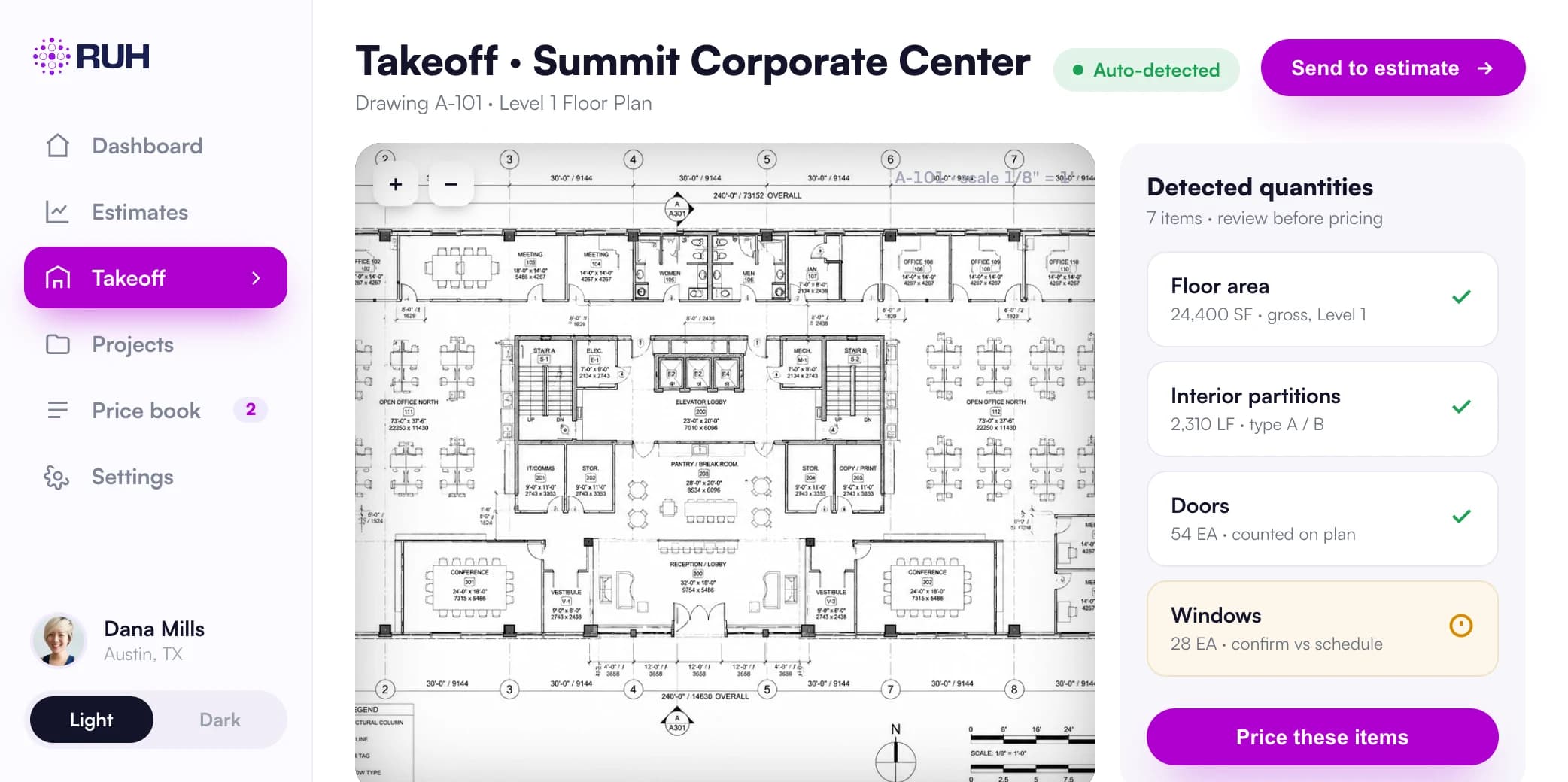
Ruh reads the roof plans, measures the sloped roof area from the drawings, and converts it to squares automatically, so the takeoff lands in the same unit your subs and suppliers quote in. It then prices those squares against your own price book, your real per-square costs, and hands the estimator a line-item draft. The estimator reviews the slope factors and waste assumptions, adjusts where judgment says otherwise, and signs off.
See AI construction takeoff and estimating softwareSQ (square): frequently asked questions
How many bundles of shingles are in a square?+
Most architectural and three-tab asphalt shingles are packaged at 3 bundles per square, so each bundle covers about 33 square feet. Heavier designer shingles can run 4 or 5 bundles per square, so always check the manufacturer's coverage chart before ordering. Add a waste factor on top of the net bundle count.
Does a square account for roof pitch?+
No. A square is simply 100 square feet of actual roof surface, and pitch only matters when you calculate that surface from a flat plan view. Multiply the footprint area by the slope factor for the pitch (about 1.054 for 4:12, 1.118 for 6:12, and 1.25 for 9:12) before converting to squares.
How much does a square of roofing cost?+
As an illustrative range for the US market in 2024 to 2026, installed asphalt shingles commonly fall around $450 to $700 per square, with metal, tile, and slate running several times that. Material alone might run $120 to $250 per square for shingles. Actual numbers depend on region, pitch, access, and tear-off scope, so price from your own cost history.
Still measuring by hand? Your next takeoff can run while you review this one.
See it on your plansSee Ruh price a bid from your own drawings.
AI takeoff and estimating on your price book, your estimator signs off.
Figures on this page are illustrative. Construction estimates depend on project-specific conditions, source documents, market pricing, and professional judgment. Ruh's AI assists the estimator and does not replace professional review: your team reviews, validates, and approves every estimate, bid, and pricing decision.