Estimating is the craft of turning a set of drawings into a defensible price for the work they describe. It is part measurement, part market knowledge, and part judgment about risk, and the good news for a beginner is that the measurement and market parts are learnable in months while the judgment grows steadily over years. This guide walks you through what an estimator actually does, the vocabulary, the workflow, and the mistakes that catch everyone early.
What does a construction estimator actually do all day?
Most days are quieter than people expect. You sit with a drawing set and a specification book, you measure quantities of work, you apply prices to those quantities, and you assemble the result into a number a contractor can stand behind in front of an owner. Around that core sit a lot of phone calls and emails: chasing supplier quotes, leveling subcontractor bids, and writing questions to the design team when the documents are unclear.
The rhythm of the job follows bid deadlines. Early in a bid you read and plan. In the middle you measure and price. In the last days you reconcile numbers, fold in last-minute quotes, and pressure-test the total. A senior estimator spends less time measuring and more time judging: deciding what a vague detail will really cost to build, where the risk sits, and how much to carry for it.
The vocabulary: takeoff vs estimate vs bid
These three words get used loosely on jobsites, but they mean different things and keeping them straight is the first sign you know the trade.
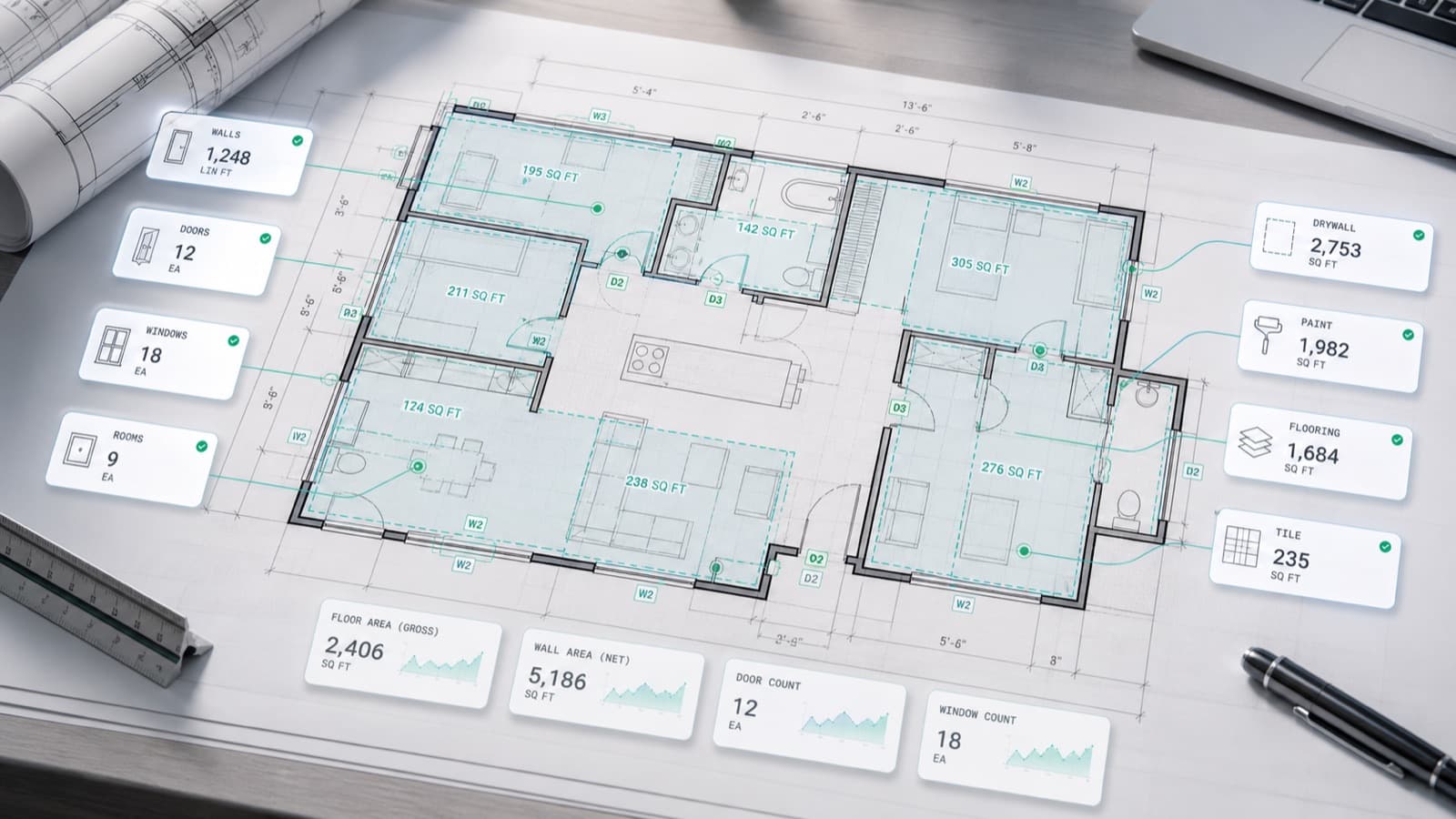
A takeoff is the list of quantities you pull off the drawings: 1,200 linear feet of 6 inch metal stud, 340 cubic yards of concrete, 84 doors. It answers one question only, how much work is there, and it carries no money.
An estimate is what you get when you price that takeoff. Each quantity is multiplied by a unit cost that bundles labor, material, and equipment, then you add the costs that are not tied to a single quantity, such as supervision, temporary facilities, overhead, and profit. The estimate is your internal cost picture.
A bid is the number you actually submit. It is the estimate plus business decisions: how hungry you are for the work, how risky the owner or schedule looks, what margin the market will bear. Two contractors with the same estimate can submit very different bids. The estimate is arithmetic. The bid is strategy laid on top of that arithmetic.
The workflow from invitation to bid
A typical commercial bid moves through a predictable sequence, and learning to see these stages keeps you oriented even on a chaotic job.
Invitation and go/no-go
A general contractor or owner invites you to bid, usually with a drawing set, a project manual, and a due date. The first real decision is whether to bid at all. You weigh the fit, the competition, your current backlog, and the quality of the documents. Chasing every invitation burns out an estimating team and wins nothing.
Reading the documents
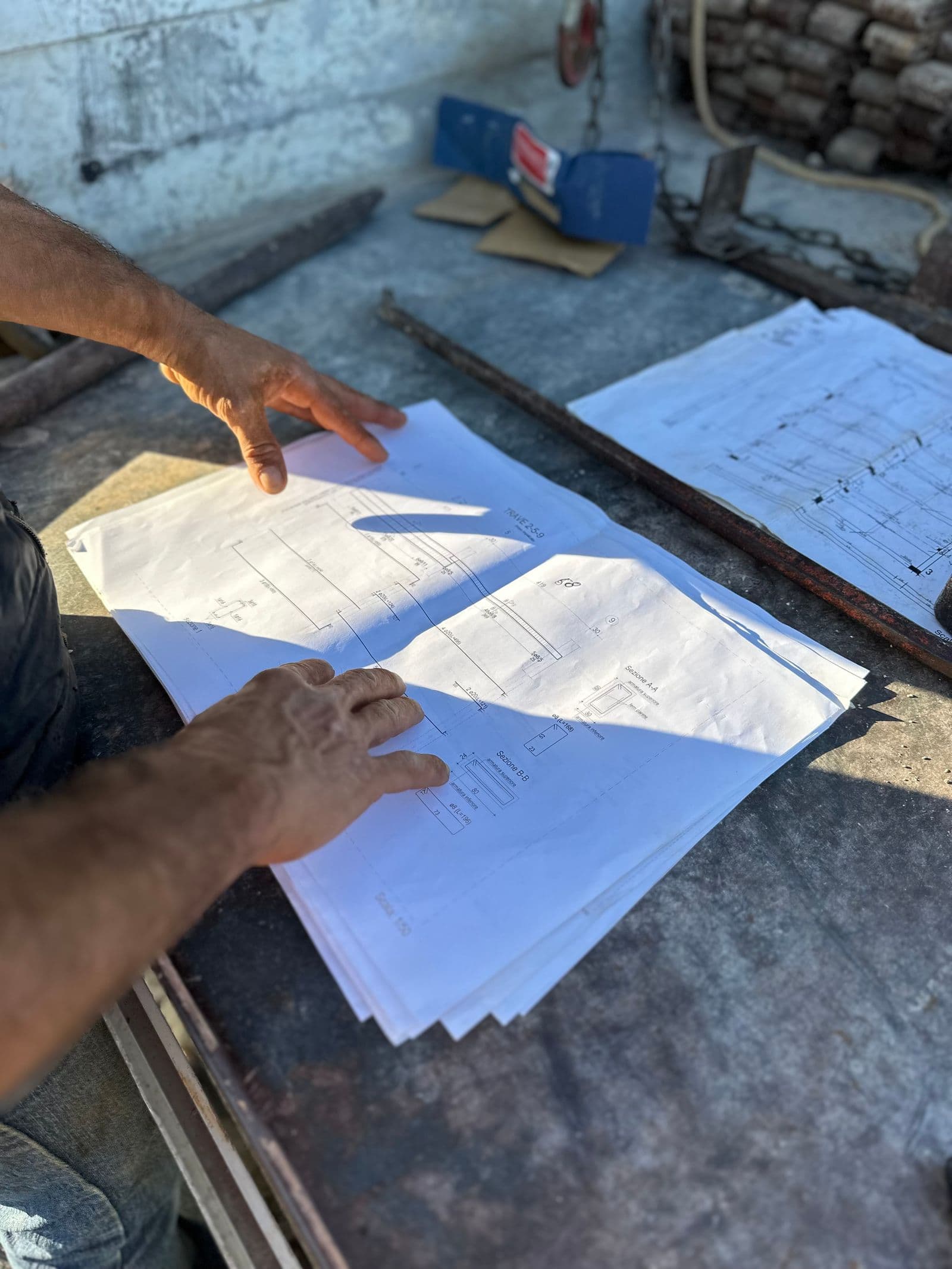
Before measuring anything, you read. The drawings show geometry and dimensions. The specifications (the project manual) define quality, materials, and the standards each product must meet. The schedules are the tables on the drawings, such as door schedules and finish schedules, that list repeated items so you do not have to hunt them sheet by sheet. Addenda are the formal changes issued during the bid period, and they override the original documents. An estimate built on a sheet that an addendum already replaced is wrong before you start.
Takeoff, pricing, and assembly
Now you measure, you price, and you assemble. You work one trade or one CSI division at a time, record the sheet number behind every quantity, and keep an open list of questions for the design team. Questions are free during the bid and expensive after award.
Review and submit
In the final stretch you reconcile against your own history (does this building cost roughly what a building like it should cost per square foot), fold in late subcontractor and supplier quotes, add markup and contingency, and submit before the clock runs out. Late bids are not opened.
The documents you read, and why each matters
Plans give you dimensions and locations. Specifications tell you the quality bar, and they routinely change the price: the same 1,000 square feet of ceiling costs very differently in a builder-grade tile versus an architectural metal panel. Schedules save you time by collecting repeated elements into tables you can count quickly. Addenda keep everyone bidding the same scope. The discipline that separates reliable estimators from the rest is simple to state and hard to live: read the specs as carefully as the drawings, and check the addenda log before you trust any quantity.
The four estimate types, one paragraph each
Estimates come in levels of accuracy that track how complete the design is. A rough order of magnitude (ROM) estimate is the earliest, built from very little information, often just a building type and a size, and it is meant for go/no-go and budgeting, not for bidding. A square foot estimate prices the project against historical cost per square foot for similar buildings, useful in early design when you have an area and a type but few details. An assembly estimate (sometimes called systems estimating) prices grouped components, such as a complete exterior wall assembly per square foot of wall including studs, sheathing, insulation, and cladding, which is faster than counting every piece and more accurate than a raw square foot number. A detailed unit cost estimate is the most accurate and the most work: a full quantity takeoff priced line by line against current unit costs, and it is what you use to submit a hard bid. For a fuller treatment, see the 4 types of construction estimates.
A worked line: from quantity to price
The cleanest way to understand estimating is to follow one item all the way through. Take an interior partition wall, 200 linear feet long and 10 feet tall, framed in metal studs at 16 inches on center, with one layer of gypsum board each side.
Start with the takeoff. Wall area is 200 ft x 10 ft = 2,000 square feet of wall. Gypsum board covers both faces, so board area is 2,000 sf x 2 = 4,000 square feet. Studs at 16 inches on center run roughly 0.75 studs per linear foot plus end and corner studs, so 200 ft x 0.75 = 150 studs, which you might carry as 160 studs to cover corners and openings.
Now price it against illustrative unit costs (US market, 2024 to 2026, figures for teaching only). Say gypsum board installed runs $2.50 per square foot and metal studs installed run $4.00 per linear foot of stud, and a 10 foot stud is 10 lf each.
- Gypsum board: 4,000 sf x $2.50/sf = $10,000
- Studs: 160 studs x 10 lf x $4.00/lf = $6,400
- Subtotal direct cost: $10,000 + $6,400 = $16,400
That subtotal is the direct cost of putting the wall in place. It is not yet a price.
A worked line: turning cost into a bid number
Direct cost is where beginners often stop, and it is exactly where margin gets lost. Carry the partition wall forward. Add a markup for overhead and profit. Suppose the company applies 15 percent overhead and 10 percent profit.
- Direct cost: $16,400
- Overhead at 15 percent: $16,400 x 0.15 = $2,460
- Running total: $16,400 + $2,460 = $18,860
- Profit at 10 percent: $18,860 x 0.10 = $1,886
- Bid price for the wall: $18,860 + $1,886 = $20,746
Notice the order. Applying overhead and profit in sequence is not the same as adding 25 percent in one step, which would give $16,400 x 1.25 = $20,500. The sequenced method yields $20,746, about $246 higher on this one wall. On a building with hundreds of lines, that difference compounds into real money, which is why how you stack markup is a deliberate company decision, not a rounding habit. For the full cost workflow, see how to estimate construction costs.
Common beginner mistakes
A few errors catch nearly everyone in the first year, and knowing them in advance is the cheapest education available.
Measuring before reading. New estimators want to start counting because it feels productive. Quantities pulled before you understand scope and addenda often get thrown away.
Forgetting waste and laps. Drywall, lumber, and concrete all lose material to cuts and spillage. A takeoff with zero waste is a takeoff that will run short. Typical waste allowances run a few percent to low double digits depending on the material and layout, and the right number comes from your own job history.
Confusing cost with price. Submitting direct cost without overhead, profit, and contingency is how companies win jobs and lose money on them.
Burying contingency inside unit prices. Padding individual numbers hides risk and makes the estimate impossible to audit later. Carry contingency as its own visible line.
Trusting a single source for pricing. Markets move. A material price from last year, or one supplier on a volatile commodity, can swing your bottom line. Confirm current quotes on the items that matter most to the total.
How do you build estimating judgment?
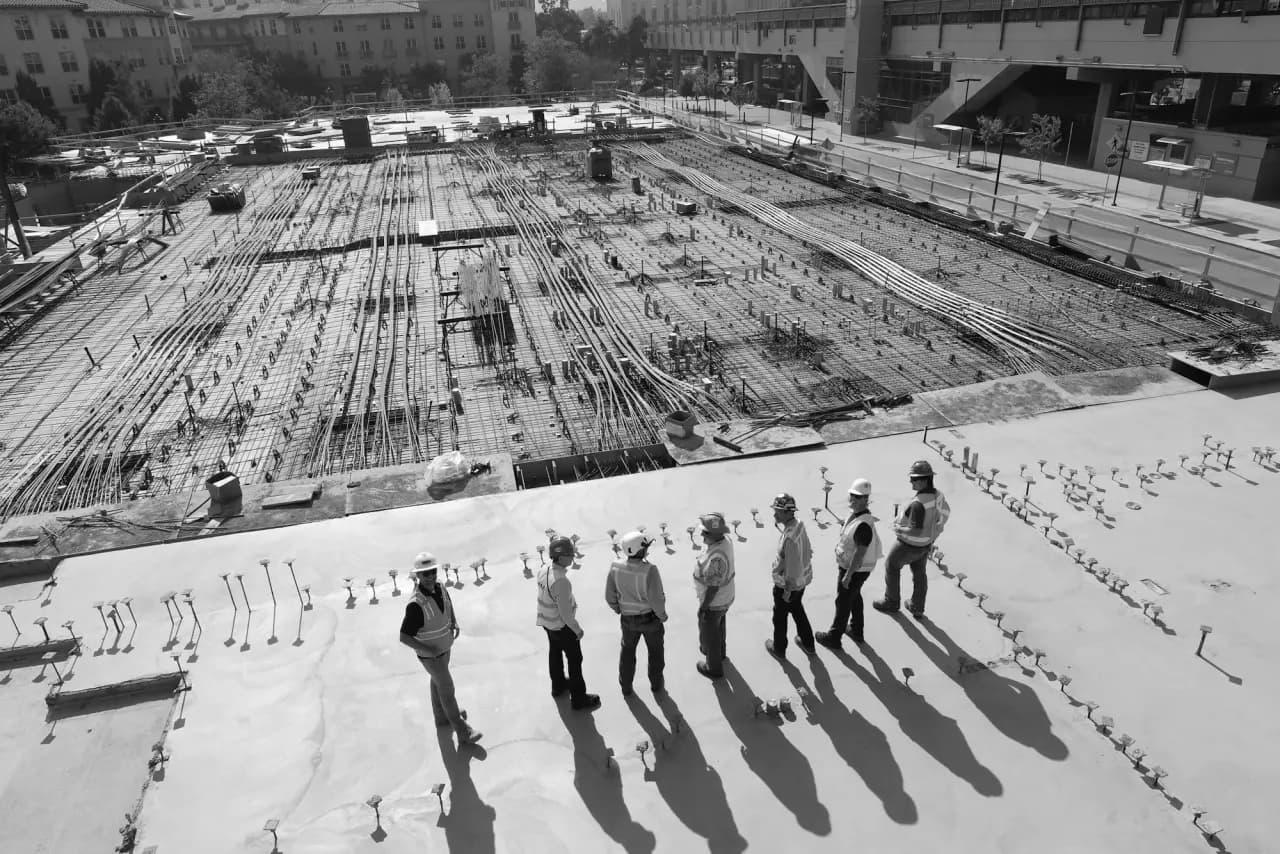
Judgment is the part you cannot shortcut, but you can accelerate it. Keep your own historical cost data and compare every completed job back against what you estimated, because the gap between estimate and actual is the most honest teacher you will ever have. Walk jobsites whenever you can, since seeing how a detail is actually built changes how you price it. Ask the field crews what slows them down. Read the specifications closely on every bid, not just the drawings. And treat each lost bid as information: knowing you were 8 percent high on a job you lost tells you something useful about either your pricing or your risk appetite.
Modern tools change how fast you can do the mechanical work without changing who owns the judgment. Ruh, for example, reads the drawings, performs the takeoff, and drafts a priced estimate against the contractor's own price book, leaving the estimator to check scope, adjust for means and methods, price the risk, and sign off. The measuring gets faster. The professional judgment stays with you, which is exactly where it belongs.
Estimating rewards patience and honesty with yourself. Your first estimates will miss, sometimes badly, and that is normal and survivable. Keep your quantities traceable, keep your pricing current, separate cost from price from bid in your own head, and compare your numbers against reality every chance you get. Do that consistently and within a couple of years you will be the person a junior estimator comes to with their questions.
Try Ruh on a real bid. 100% money-back guarantee if you are not satisfied.*
*Scoped delivery, terms apply. Read the guarantee terms
Frequently asked questions
What is the difference between a takeoff, an estimate, and a bid?+
A takeoff is the list of quantities measured off the drawings and carries no money. An estimate prices that takeoff with unit costs and adds overhead and profit to show your cost picture. A bid is the number you actually submit, which is the estimate plus business decisions about risk and how much you want the work.
How long does it take to become a construction estimator?+
Most people can learn the mechanics of takeoff and pricing within several months of focused work, especially with mentoring on real bids. Building reliable judgment about scope, risk, and means and methods takes a few years of comparing your estimates against actual job results. The learning curve is real but steady, and every completed job teaches you something.
Do I need a degree to be a construction estimator?+
A construction management or engineering degree helps and is common, but it is not the only path. Many strong estimators come up through the trades or through field roles and bring valuable hands-on knowledge of how work is actually built. What matters most is the ability to read documents carefully, do careful arithmetic, and learn from the gap between your estimates and real outcomes.
What software do beginner estimators use?+
Beginners often start with spreadsheets and a digital takeoff tool, since the core skill is understanding quantities and pricing before automating them. AI estimating tools can now read drawings, perform the takeoff, and draft a priced estimate against your own price book. They speed up the mechanical work, but you still need to understand the fundamentals so you can check the output and own the final number.
Can AI do construction estimating for a beginner?+
AI can read drawings, produce the takeoff, and draft a priced estimate against a contractor's own cost data, which removes most of the manual measuring. It does not replace the estimator. Scope interpretation, means and methods, risk pricing, and final sign-off remain human decisions, so a beginner should use AI to learn faster and check its work, not to skip the fundamentals.
Still pricing in a spreadsheet? Your price book, automated end to end. Your estimator signs off.
See it runTerms used in this guide
Figures on this page are illustrative. Construction estimates depend on project-specific conditions, source documents, market pricing, and professional judgment. Ruh's AI assists the estimator and does not replace professional review: your team reviews, validates, and approves every estimate, bid, and pricing decision.