
TL;DR / Summary
Think of the AI SDR not as another software tool, but as your company's first digital employee in sales. This article shows how an autonomous team member works 24/7 to completely transform your sales outreach by handling the entire process from finding leads to sending personalized messages that actually get replies at a fraction of the cost of a human SDR.
In this article, we will dive deep into:
- What is an AI SDR?
- Meet Your New Digital Teammate: The AI SDR That’s Changing Sales Forever
- Why Your Sales Process is Inefficient (And What to Do About It)
- How AI SDRs Are Replacing Old Sales Methods and Saving Costs
- How to Implement Your First Digital Employee and Measure Success
- Conclusion: The Future of Your Sales Team Has a Desk Waiting
What is an AI SDR?
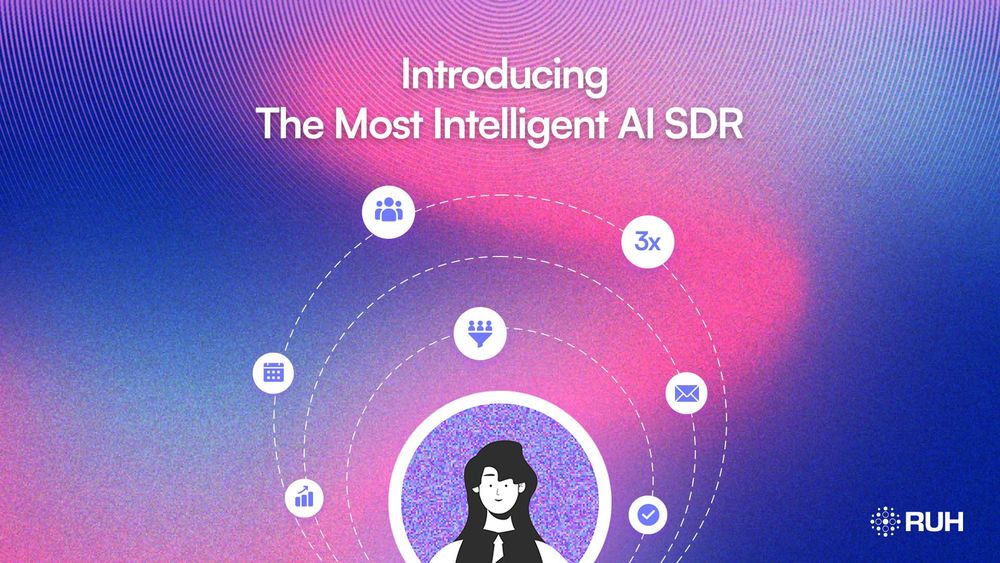
An AI SDR is like a smart digital helper for sales teams. It uses artificial intelligence to do early sales jobs that humans usually find repetitive, like finding new leads, sending messages, and checking who might be interested. It works all day, every day, and does a lot very quickly, which helps real salespeople save time and focus on talking to customers and closing deals. Plus, it can personalize messages for people using data just like a human would, but much faster.
Meet Your New Digital Teammate: The AI SDR That’s Changing Sales Forever
For years, "scaling your sales team" meant a painful cycle: expensive recruitment, lengthy training, and the constant risk of burnout. What if you could skip that entire process and hire a top-performing Sales Development Representative (SDR) who works 24/7, never gets tired, and costs a fraction of the price?
That future is now. The sales world is undergoing its most significant transformation since the invention of CRM. The shift isn't just another software tool; it's the arrival of your first digital employee.
At Ruh, we've moved beyond simple automation to create a true AI SDR: your first digital employee. This isn't a chatbot or an email blaster. It's a knowledge-aware, autonomous team member designed to handle the entire top-of-funnel grind, freeing your human talent to do what they do best: build relationships and close deals.
Why Your Sales Process is Inefficient (And What to Do About It)
The Traditional SDR's Unsustainable Math
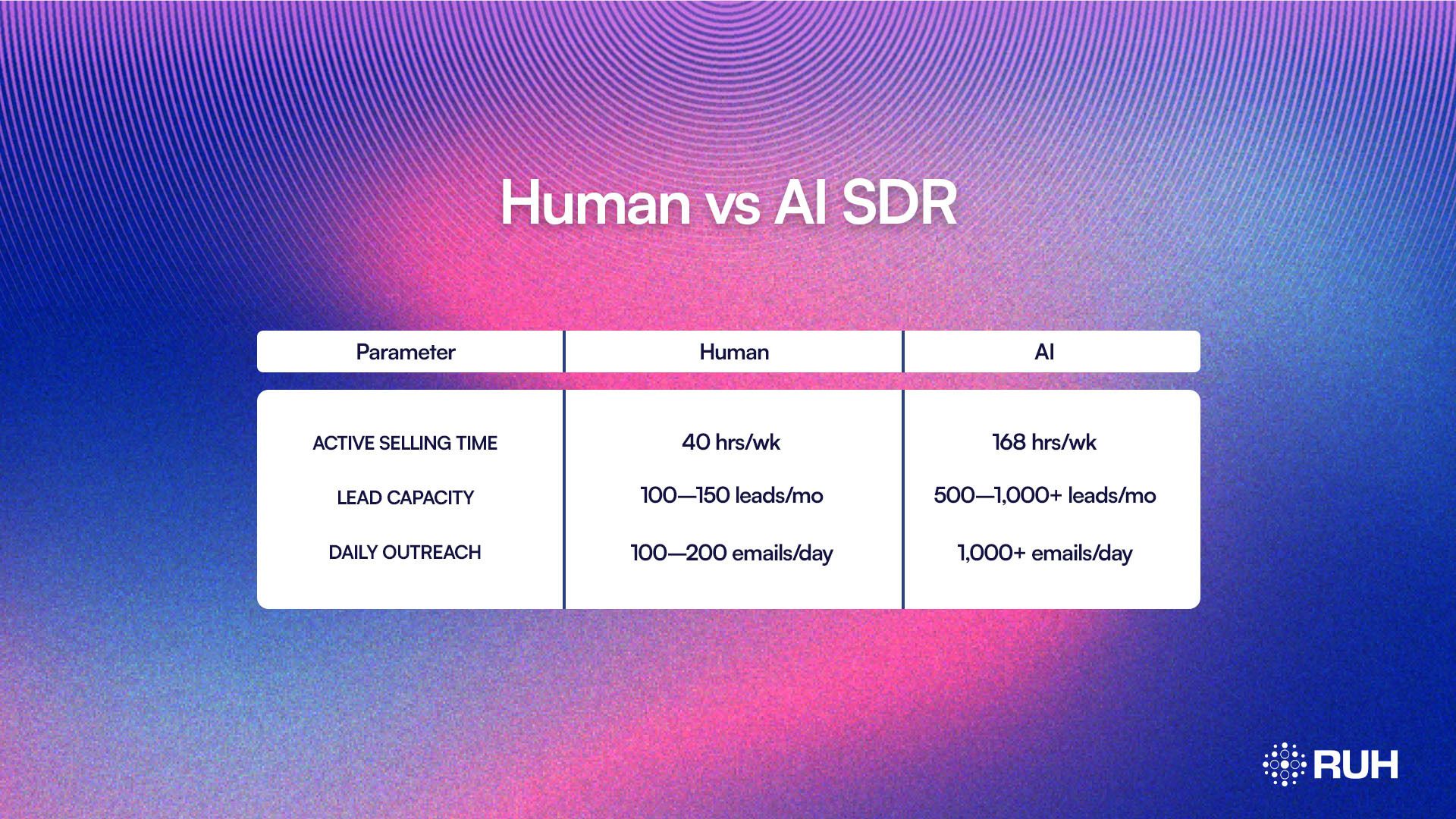
Let's be blunt: the traditional SDR model is hitting a wall. The math simply doesn't scale. When you factor in salary, benefits, tools, and management overhead, a single human SDR costs a company between $75,000 and $101,000 annually. For that investment, even a great SDR is limited by human constraints:
- They can only make so many calls and send so many emails per day.
- They need sleep, weekends, and vacations.
- They experience burnout from repetitive rejection and tedious tasks.
This creates a ceiling on your growth. To double your outreach, you have to double your headcount and double your costs. This is the bottleneck the AI SDR, your first digital employee, is built to break.
The Modern Buyer Demands More
Simultaneously, B2B buyers have radically changed. They expect hyper-personalization, instant responses, and relevant value propositions in every interaction. A generic, mass-produced email won't just be ignored; it will damage your brand reputation.
Your first digital employee solves for both sides of this equation: it delivers the personalization buyers crave at the scale your business needs to survive.
How AI SDRs Are Replacing Old Sales Methods and Saving Costs
Digital Employee vs. Automation Tool: What's the Difference?
Most businesses have used automation tools. These are typically point solutions: one tool for scraping leads, another for sending emails, a third for tracking opens. They automate tasks, but they don't think.
An AI SDR is not a simple chatbot or an email blaster. It's an autonomous, knowledge-powered digital employee designed to handle the entire top-of-funnel sales process. Think of it as a hybrid team member that conducts lead research, personalizes outreach, engages in real-time conversations, and books qualified meetings all day, every day.
This guide will help you understand what an AI SDR is, why it’s a game-changer for modern sales teams, and how you can implement it to achieve scalable growth.
Traditional Automation Tool
- Task-Based Execution: Follows rigid, predefined rules for single tasks (e.g., just sending emails).
- Generic Messaging: Relies on static templates with basic personalization fields like [First Name].
- High Maintenance: Requires constant manual configuration, tweaking, and monitoring to function.
- Deliverability Risks: Often lacks sophisticated sending protocols, increasing the chance of landing in spam folders.
Digital Employee (Ruh's AI SDR)
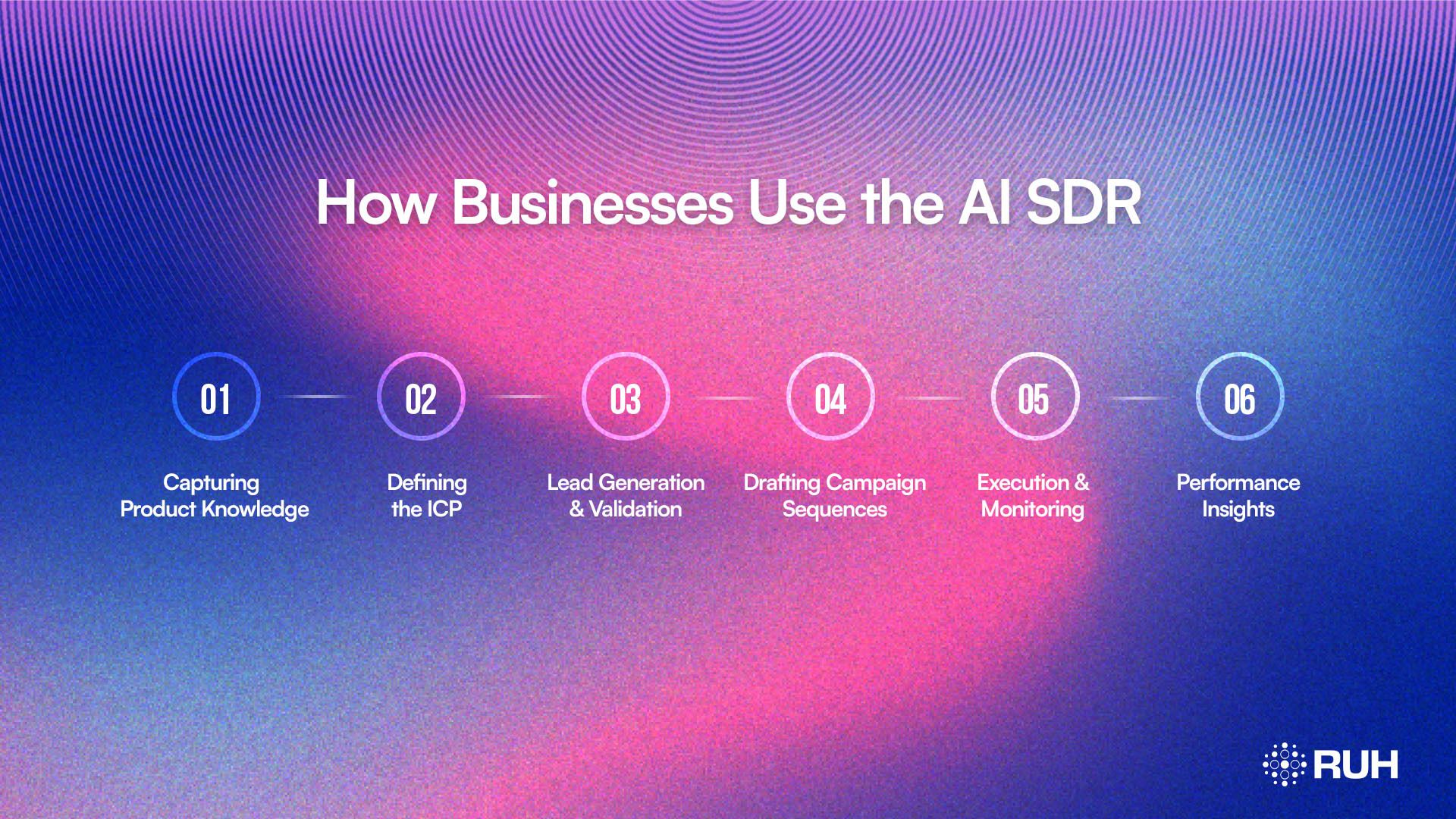
- End-to-End Workflow Management: Autonomously handles the entire SDR process, from lead research and validation to outreach and performance reporting.
- Knowledge-Powered Personalization: Crafts genuinely unique messages by drawing insights from your specific company documents, case studies, and product knowledge.
- Conversational Command & Control: You simply tell it what you want in plain English (e.g., "Target tech VPs in the Midwest"), and it executes no complex setup needed.
- Built-In Deliverability & Compliance: Uses intelligent sending patterns and partnerships to protect your domain reputation and ensure emails reach the inbox, with built-in compliance safeguards.
A Day in the Life of Your First Digital Employee
To understand the power of this shift, let's walk through a day in the life of your new digital employee:
- 8:00 AM: While your team is commuting, your AI SDR has already analyzed lead lists, verified contact data, and queued the first wave of hyper-personalized emails tailored to each recipient's industry and role.
- 12:00 PM: As your team breaks for lunch, the digital employee is in high gear. It's fielding replies in real-time, classifying positive intent, handling simple objections, and automatically booking qualified meetings directly onto your AEs' calendars.
- 5:00 PM: While your human team logs off, your AI SDR is just getting started. It's analyzing the day's performance data, refining its targeting for tomorrow, and launching a targeted LinkedIn outreach sequence to leads in different time zones.
- 2:00 AM: A key decision-maker in Europe opens your email, reads the personalized case study, and books a demo through the AI's scheduling link. A new, high-value pipeline opportunity is created while your entire company sleeps.
This is the power of a digital employee: continuous, intelligent, and outcome-driven sales execution.
How to Implement Your First Digital Employee and Measure Success
The Hybrid Human + AI Sales Model
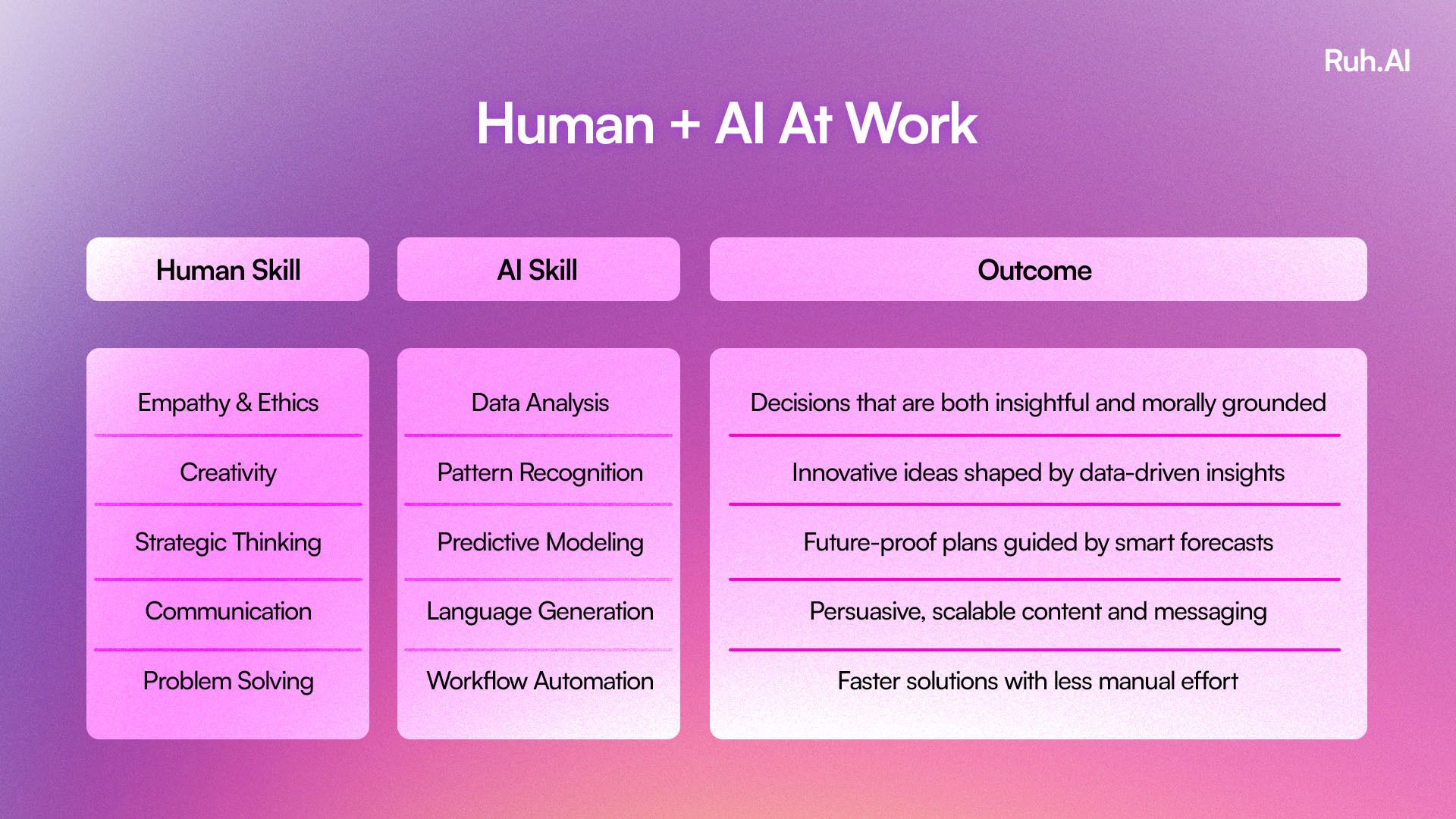
Adopting an AI SDR isn't about replacing your team. It's about creating a powerful hybrid model that leverages the best of both worlds.
- Your Digital Employee Handles: Lead research, data validation, initial outreach, response triage, and meeting booking.
- Your Human Team Focuses On: High-stakes negotiations, building deep customer relationships, navigating complex objections, and closing strategic deals.
Companies using this model report a 35% increase in sales productivity and a 25% boost in pipeline growth because each part of the team is doing what they're best at.
The Unbeatable ROI of a Digital Employee
Let's look at the hard numbers. This is where the concept of a digital employee moves from a futuristic idea to a financial imperative.
- Cost: An AI SDR runs at just $12,000 to $24,000 annually, a 70-80% reduction compared to a human SDR.
- Productivity: It operates across multiple channels (email, social, SMS) 24/7, performing the work of 2-3 human SDRs.
- Performance: Businesses report 2–4x more qualified meetings booked and a 30% shorter sales cycle.
- Composite ROI: In the first year, the ROI for an AI SDR as your first digital employee typically ranges from 2,383% to 4,038%. This isn't an expense; it's one of the highest-return investments a sales organization can make.
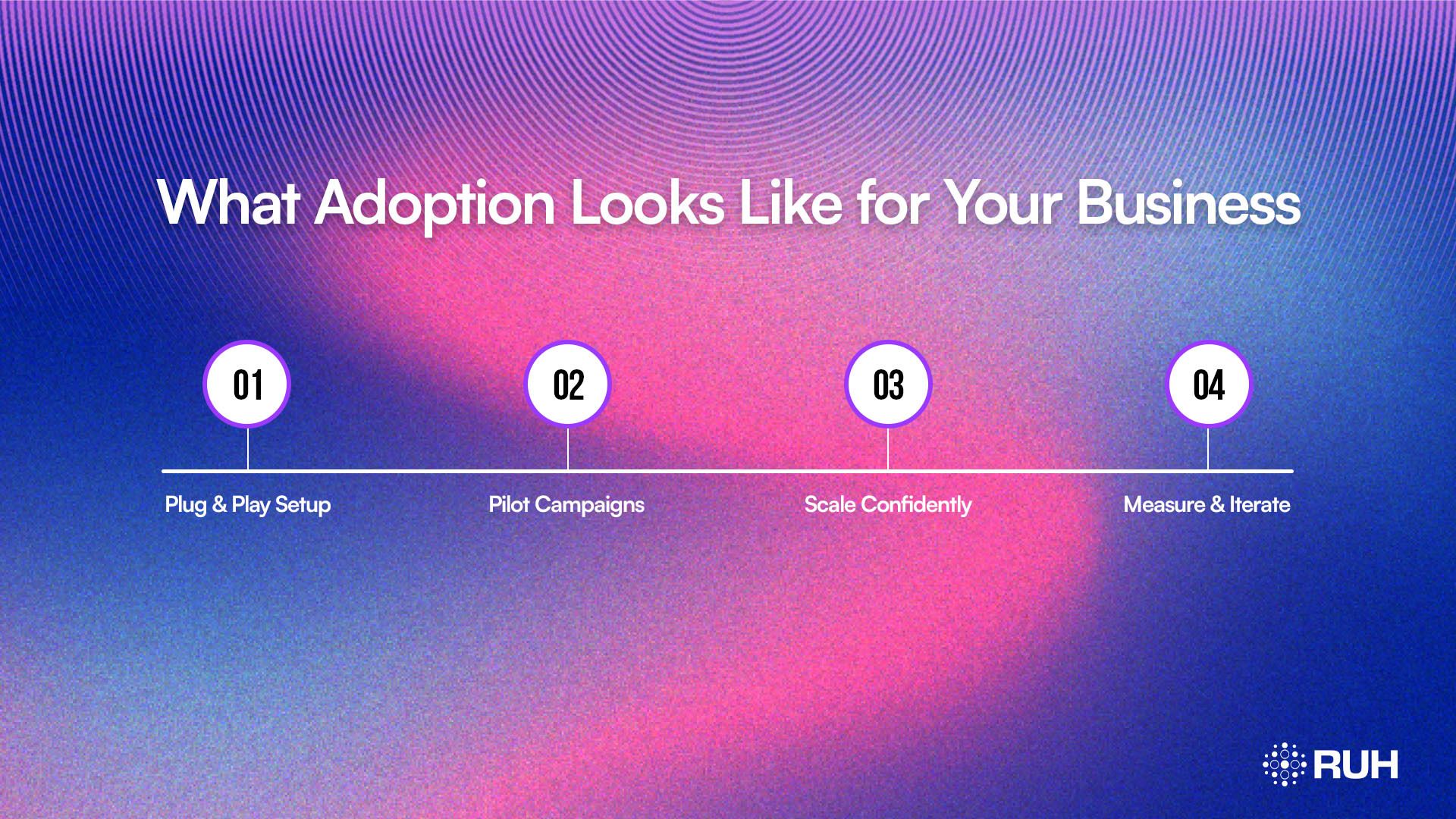
Your 4-Step Adoption Plan
Implementing your first digital employee is a strategic process, not a technical one.
- Knowledge Onboarding (Week 1): "Train" your AI SDR by uploading your sales decks, product sheets, case studies, and win/loss reports. This is how it learns your unique voice and value proposition.
- ICP & Campaign Design (Week 1): In a simple chat interface, define your Ideal Customer Profile. For example, you might type: "Target VPs of Marketing at SaaS companies with 200-500 employees in North America, with a consultative tone." Your digital employee will build the campaign for your approval.
- Pilot & Validate (Weeks 2-3): Launch a small-scale campaign to a single segment. Monitor the open rates, reply rates, and meeting quality to build confidence and refine the approach.
- Scale & Integrate (Ongoing): Once proven, scale across multiple segments and regions. Integrate deeply with your CRM so that every activity and lead is seamlessly tracked, providing a crystal-clear view of your new digital team member's impact on pipeline and revenue.
Conclusion: The Future of Your Sales Team Has a Desk Waiting
The story of the AI SDR as your first digital employee is more than a tale of efficiency; it's a fundamental rearchitecture of the sales function. It represents a shift from human-led, tool-assisted sales to a hybrid model of human strategy and digital execution.
The question is no longer if this transition will happen, but when. The early adopters are already building insurmountable advantages in cost, scale, and speed. The numbers don't lie: 80% cost savings, 4x the meetings, and quadruple-digit ROI.
Your first digital employee sn't just a few lines of code. It's a hire. And its desk is ready.
Click Here to Schedule a Demo and Meet Your First Digital Employee
If the shift from chat tools to digital sales employees has changed how you think about delegated work, Ruh AI is a starting point for considering that model in construction.