
The 4 Ps of marketing - Product, Price, Place, and Promotion have shaped how businesses go to market for more than half a century.
They offered clarity in an era where customer insight was scarce, feedback cycles were long, and strategic decisions were made periodically rather than continuously.
But the assumptions behind the traditional marketing mix no longer hold.
Customers move fluidly across channels, expectations change rapidly, and competitive advantage is increasingly defined by speed, relevance, and adaptability.
In this environment, static frameworks struggle to keep up.
Artificial intelligence changes this equation.
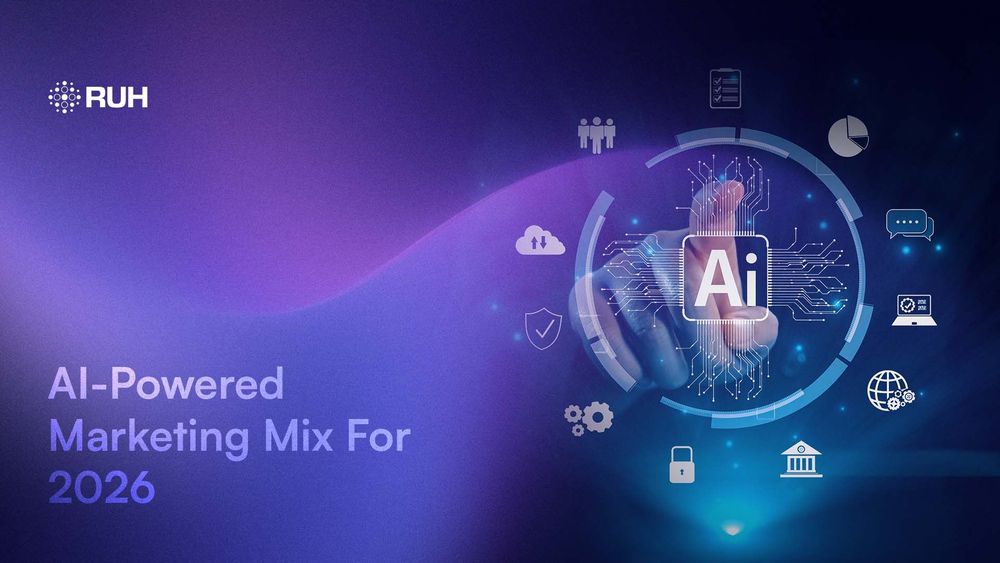
By embedding intelligence directly into decision-making, AI transforms the 4 Ps from a planning checklist into a living, adaptive system one that senses demand, predicts outcomes, and optimizes performance in real time.
The result is not a new marketing model, but a fundamentally upgraded version of the existing one.
Understanding the Traditional 4 Ps
The original 4 Ps framework was designed to simplify complexity.
Each “P” represented a controllable lever that marketers could adjust to influence demand.
Historically, these levers operated independently and were revisited on fixed schedules.
In practice, this looked like:
- Product decisions driven by market research, surveys, and post-launch feedback
- Price set through cost structures, margin targets, and competitive comparisons
- Place optimized around channel selection, logistics, and geographic reach
- Promotion planned as campaigns, measured retrospectively through performance reports
This approach worked when markets were stable and change was incremental.
However, it created blind spots in environments where customer behavior shifts quickly and journeys span multiple touchpoints simultaneously.
AI addresses these limitations by introducing continuous feedback loops across all four Ps allowing strategy and execution to evolve together rather than separately.
AI Revolutionizes Product Development
From Research-Led Decisions to Predictive Product Strategy
AI fundamentally changes how products are imagined, developed, and refined.
Instead of relying solely on backward-looking research, machine learning models analyze vast datasets to anticipate future demand.
These systems ingest signals such as:
- Historical sales and usage patterns
- Real-time behavioral data
- Seasonal and regional trends
- External factors like economic conditions and supply constraints
As a result, AI-driven demand forecasting reduces prediction errors by 20–50%.
This improvement has profound strategic implications.
Product teams can prioritize features with higher confidence, identify emerging market gaps earlier, and reduce the risk of overproduction or misalignment.
Decisions move from what worked to what will work.
Product Development Acceleration and Experimentation
AI also accelerates product iteration.
Generative and predictive models help teams explore more design variations, simulate performance outcomes, and test concepts before committing resources.
This enables organizations to:
- Shorten product development cycles
- Reduce dependency on costly trial-and-error launches
- Align product roadmaps more closely with real demand signals
Product development becomes less about intuition and more about probability-weighted decision-making.
Personalization at Scale
One of AI’s most transformative contributions to Product is personalization at scale.
Intelligent systems continuously learn from customer interactions to tailor product experiences dynamically.
Organizations using AI-powered personalization report:
- Up to 25% higher conversion rates
- Around 15% increases in customer satisfaction
- Stronger loyalty driven by relevance rather than discounting
After personalization is embedded, Product is no longer a static offering.
It becomes an adaptive interface between brand and customer shaped in real time by data.
Dynamic Pricing with AI
From Periodic Price Reviews to Continuous Optimization
Pricing has traditionally been one of the slowest-moving elements of the marketing mix.
Prices were updated quarterly or annually, often lagging behind real market conditions.
AI replaces this rigidity with continuous pricing intelligence.
Machine learning models adjust prices dynamically based on demand, inventory levels, competitive signals, and customer behavior while respecting predefined business rules.
Organizations implementing AI-driven pricing achieve:
- 10–15% increases in revenue
- 2–10% improvements in margins
- Up to 80% reductions in unprofitable promotions
These outcomes demonstrate that pricing optimization is no longer about finding a single “right” price, but about maintaining ongoing price alignment with market reality.
Behavioral and Segmented Pricing
Beyond real-time optimization, AI enables pricing strategies that reflect individual and segment-level behavior.
Machine learning models evaluate factors such as:
- Purchase frequency
- Sensitivity to discounts
- Engagement history
- Stage in the customer lifecycle
The result:
- Promotions become more targeted and less wasteful
- Margins are protected without sacrificing volume
- Customers experience pricing as contextual rather than arbitrary
Price evolves from a static number into a behavior-aware growth lever.
Optimized Place Through Predictive Analytics
From Channel Selection to Journey Orchestration
In modern marketing, “Place” is no longer about choosing where to sell.
It is about orchestrating how customers move across touchpoints.
AI enables this orchestration by synchronizing inventory, fulfillment, and engagement across online, offline, mobile, and social channels.
AI-powered omnichannel strategies deliver:
- 91% higher year-over-year customer retention
- 12% revenue growth within the first year
- Up to 30% reductions in excess inventory
These gains reflect AI’s ability to align supply with real-time demand across the entire ecosystem.
Real-Time Visibility and Experience Continuity
AI-driven inventory visibility allows organizations to support complex experiences—such as buy-online-pick-up-in-store or same-day delivery—without operational breakdowns.
After implementation, customers interact with a brand that feels consistent, responsive, and unified, regardless of channel.
Place shifts from logistics optimization to experience continuity.
Hyper-Promotion Strategies Powered by AI
Intelligent Content Creation and Performance Optimization
Promotion is where AI’s operational impact is most immediately visible.
Intelligent systems now support content creation, personalization, testing, and optimization across channels.
Improvements include:
- Up to 95% reduction in content creation time
- Higher engagement across email, ads, and social media
- An average 68% increase in ROI for AI-supported campaigns
These efficiencies allow marketing teams to redirect effort from production to strategy, creative direction, and experimentation.
Continuous Experimentation Instead of Static Testing
AI replaces traditional A/B testing with adaptive experimentation models that learn continuously while campaigns are live.
This enables:
- 5–10% more conversions captured during testing windows
- Faster identification of winning messages and formats
- Performance improvements that compound over time
Promotion evolves from episodic execution into real-time performance orchestration.
The AI 4 Ps Maturity Model
AI adoption is not uniform.
Organizations progress through stages as intelligence becomes embedded across the marketing mix.
The AI 4 Ps Maturity Model includes:
- Assisted: AI supports insights, reporting, and automation
- Adaptive: AI dynamically adjusts decisions within defined guardrails
- Autonomous: AI executes, learns, and optimizes end-to-end
Organizations reaching the autonomous stage across all four Ps experience tighter alignment between strategy and execution, faster response to market changes, and higher overall efficiency.
Building Your AI Marketing Mix Roadmap
Transforming the marketing mix with AI requires more than tools—it requires structural change.
Successful organizations focus on:
- Unified, high-quality data foundations
- Clear governance and ethical oversight
- Continuous measurement and feedback loops
- Systems that integrate decision-making across Product, Price, Place, and Promotion
This explains the shift toward AI employees rather than isolated AI features systems capable of owning workflows, coordinating actions, and driving outcomes across the go-to-market lifecycle.
Platforms like Ruh AI represent this evolution by enabling AI employees that handle research, personalization, outreach, optimization, and reporting as a unified system—bringing intelligence directly into execution.
The Future of the Marketing Mix
AI does not replace the 4 Ps. It activates them continuously.
Product becomes predictive. Price becomes responsive. Place becomes fluid. Promotion becomes intelligent.
But realizing this future requires more than adding AI features to existing tools. It requires intelligent systems that can own execution across the entire marketing mix systems that learn, adapt, and act in real time.
This is where Ruh AI comes in.
Ruh AI is built to deploy AI employees, not point solutions.
These AI employees operate across Product intelligence, pricing insights, omnichannel engagement, and performance-driven promotion coordinating decisions across the 4 Ps rather than optimizing them in isolation.
Instead of managing disconnected dashboards, teams using Ruh AI gain:
- Continuous insight into customer demand and behavior
- Autonomous execution across marketing and sales workflows
- A marketing mix that evolves in real time as the market changes
If your organization is ready to move beyond static strategy frameworks and into a world of living, intelligent marketing systems, Ruh AI provides the foundation to make that shift.
Explore how Ruh AI can transform your marketing mix from planning to performance continuously.
The broader lesson behind an adaptive marketing mix is that AI creates value by connecting planning with execution, a principle you can explore in a construction context through Ruh AI.