
A decade ago, conversational marketing meant a small chat bubble in the corner of a website.
What started as a simple live-chat widget has become a fully autonomous customer-experience engine powered by NLP, hyper-personalization, sentiment analysis, and real-time interactions.
But as businesses scale faster than ever, a bigger question is emerging:
Will chatbots stay in the spotlight, or will AI marketing employees take over?
This blog dives into the rise of AI employees in marketing and the role they’ll play in the next era of conversational marketing.
What is Conversational Marketing?
Conversational marketing is a strategy built on real-time dialogue.
It brings together chat interfaces, voice assistants, messaging platforms, and AI-driven personalization to nurture leads and speed up decision-making.
It also boosts engagement by meeting customers where they already communicate.
Market behavior shows how fast this space is growing.
The global conversational AI market is on track to hit $41.39 billion by 2030.
The driving force: rising demand for instant, personalized customer experiences.
Voice interactions are surging as well, with voice commerce expected to exceed $57 billion by 2025.
Customers increasingly expect this immediacy, 71% of customers want real-time interactions instead of long conversations.
In short: conversational marketing is no longer optional. It’s a requirement for modern customer experience.
AI Chatbots Explained
AI chatbots represent the first major wave of conversational marketing.
Built on advancements in natural language processing and real-time intent recognition, they excel at handling high-volume, repetitive customer interactions with speed and accuracy.
By analyzing patterns from thousands or millions of interactions, they refine answers, anticipate user needs, and improve their understanding of context and sentiment over time.
Their ability to respond within seconds is a major revenue driver.
Companies that reply to inquiries within one minute see 391% higher conversion odds, and chatbot-powered sites often outperform traditional funnels dramatically.
Chatbots have proven extremely valuable due to their scalability:
- They can now handle up to 80% of simple customer complaints, which dramatically reduces strain on human teams.
- Response speed increases by 83%, with resolution time dropping from 18.6 hours to 3.2 hours when AI is implemented.
- Costs drop from $6 per human interaction to as little as $0.006, creating a 12× cost advantage.
This cost-to-performance ratio is why chatbot deployments are expected in 80% of retail and ecommerce businesses by 2030.
AI chatbots have not only accelerated operational workflows but also transformed customer satisfaction: 87.2% of consumers rate chatbot interactions as positive or neutral.
What began as a support tool is now a robust driver of inbound marketing, lead qualification, and engagement.
AI Marketing Employees: The Next Frontier
AI marketing employees sometimes referred to as “AI agents” represent the second evolution beyond chatbots.
Instead of merely responding to queries, these systems autonomously execute multi-step marketing tasks that traditionally required human expertise.
While chatbots focus on answering customer messages, AI marketing employees are trained to perform work across an organization’s revenue operations.
They combine natural language reasoning, predictive analytics, sentiment analysis, workflow automation and multimodal understanding.
This makes them capable of replacing or augmenting human roles in marketing, sales, customer care, and service operations.
AI marketing employees don’t just answer questions—they make decisions:
- They evaluate leads and assign qualification scores
- They craft personalized product recommendations
- They detect intent and proactively prevent churn
- They analyze sentiment to determine whether to escalate a conversation
- They can run A/B campaigns, adjust copy, and optimize channels
These capabilities lead to substantial performance gains.
Teams using agentic AI weekly save up to 12 hours per employee per week and report 78% shorter deal cycles with 70% larger deal sizes.
83% of companies deploying AI agents see positive ROI almost immediately, and 79% of frequent AI users say AI makes their teams more profitable.
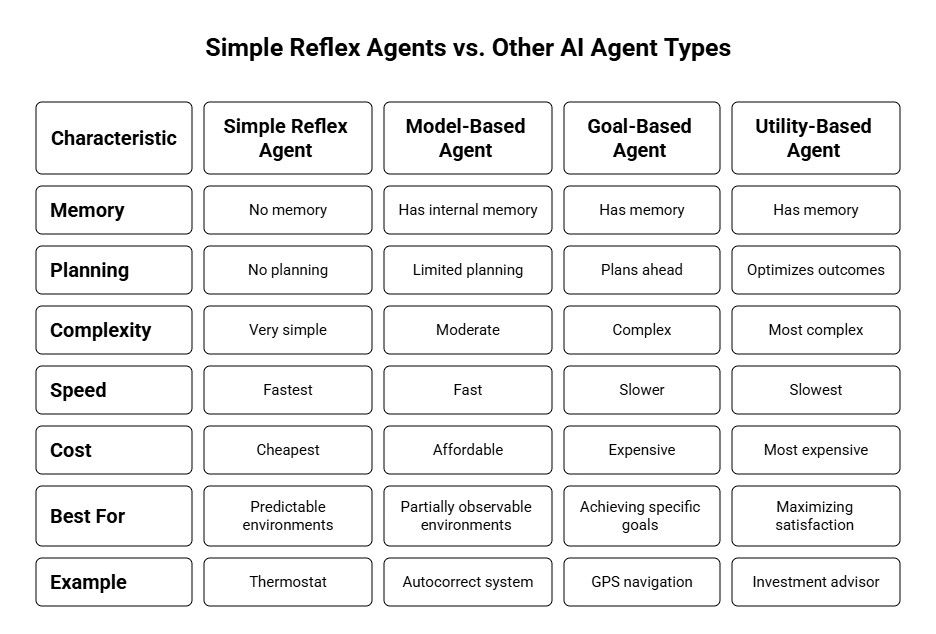
AI Marketing Employees vs Chatbots: Key Differences
Benefits of AI Marketing Employees
1. Hyper-Personalization That Drives Revenue
AI systems using real-time behavioral data, sentiment analysis, and predictive modeling provide deeply personalized customer journeys.
This level of personalization drives significant revenue, and companies using AI for customer targeting report higher conversion rates.
AI marketing employees deliver personalization at a scale no human team could feasibly manage, ensuring customers receive highly relevant messages, product suggestions, and support at precisely the right moment.
2. Significant Improvements in Customer Satisfaction
AI marketing employees drastically enhance customer experience by reducing wait times, improving accuracy, and enabling 24/7 availability.
Chatbots alone have led to 81% improvement in customer satisfaction, and advanced AI marketing employees achieve CSAT scores up to 97%.
These high satisfaction levels translate into stronger loyalty 82% of brands report improved loyalty after implementing conversational AI.
For brands like Hermès, the introduction of AI directly resulted in a 35% increase in customer satisfaction.
3. Real-Time Interactions That Maximize Conversions
Speed is one of the strongest conversion drivers in marketing. Responding within seconds can change customer outcomes dramatically.
Data shows that a one-minute response time can boost conversion odds by 391%, while slow responses cause 80% of qualified leads to go cold.
Conversational systems ensure brands are always “first to respond,” capturing more pipeline and closing more deals.
4. Massive Cost Reductions Across Teams
AI marketing employees dramatically reduce operational spending. With AI interactions costing as little as $0.006, compared to $3–$6.50 for human agents, the savings are enormous.
AI-led customer service interactions are approximately 30% cheaper, and companies can save up to $11 billion and 2.5 billion hours by automating support.
This financial impact is why 92% of business leaders now consider conversational marketing essential.
5. Productivity Gains That Transform Team Output
AI marketing employees are reshaping how work gets done. Teams using AI weekly achieve:
- 47% higher productivity,
- more issues resolved per hour,
- and up to 12 hours saved per week by removing manual tasks.
Less-experienced workers benefit the most, showing 35% productivity improvement thanks to AI-assisted reasoning and task automation.
This democratizes performance across teams.
6. Improved Customer Retention and Loyalty
Retention rates rise significantly when AI marketing employees are used strategically.
AI-driven 24/7 availability, proactive communication, and sentiment-driven interactions ensure customers remain engaged throughout their lifecycle.
Omnichannel conversational systems also prevent customers from repeating themselves—a common frustration—resulting in smooth transitions between digital and human support channels.
Challenges Of Using AI Marketing Employees
1. Data Privacy Concerns
Despite widespread adoption, 4 out of 10 consumers remain hesitant to use AI for shopping advice due to privacy concerns.
The sensitive nature of customer data means businesses must ensure robust security, encryption, and ethical data handling.
Failure to do so not only risks compliance breaches but also erodes customer trust.
2. Reliability and Expectation Gaps
A significant perception gap exists: while 90% of business leaders believe their conversational AI is delivering strong customer satisfaction, only 59% of consumers agree.
This shows that while AI often performs well on operational KPIs, the emotional or experiential quality sometimes falls short. Continuous training and refinement are crucial.
3. Integration Complexity
Implementing conversational AI into outdated systems can be challenging.
Legacy CRMs, fragmented data, and siloed communication channels can hinder smooth deployment.
This is why 30% of contact centers are upgrading their systems in 2024, with another 42% planning updates in 2025.
Modern, unified data infrastructure is essential for AI performance.
Why Businesses Are Shifting Toward AI Marketing Employees
Three major realities are accelerating this shift:
- Complexity of Customer Journeys – Modern buyers demand personalized, omnichannel communication that chatbots alone cannot orchestrate.
- Operational Cost Pressures – AI-driven workflows drastically reduce labor demands and support cost structures.
- Rise of Autonomous Commerce – Customers increasingly complete transactions through AI-led experiences without speaking to a human.
Future Trends We’re Waiting For
1. Multimodal Conversational AI Becomes Standard
Multimodal AI—combining text, images, voice, video, and gestures—will become the norm.
The growth of voice assistants supports this trend, with 60% of smartphone users using voice assistants these days and 153.5 million U.S. users expected in coming years.
Multimodality enables richer interactions and more natural conversations, especially in complex decision-making scenarios like healthcare, finance, and high-consideration ecommerce.
2. Autonomous Commerce Takes Over
Customers increasingly complete purchases without human involvement. Conversational AI platforms are projected to generate $290 billion in ecommerce spending by 2025.
AI marketing employees will manage not just product questions but the entire transaction—from recommending products to processing payments to initiating fulfillment.
This trend aligns closely with the rise of AI marketing employees, who act as autonomous digital workers.
3. Predictive and Proactive Customer Support
Companies are shifting from reactive service to predictive support models where AI forecasts issues before they occur.
Predictive routing increases first-contact resolution and reduces transfer rates. Gartner predicts conversational AI will reduce agent labor costs by $80 billion globally by 2026.
This trend will redefine customer expectations around waiting, escalation, and problem-solving.
4. Regional Acceleration and Market Domination
North America currently leads with 35.46% market share, thanks to early adoption and heavy investment.
APAC is expected to grow fastest due to expanding smartphone usage, rising internet penetration, and rapid digital transformation.
This geographic split will shape product design and deployment strategies across global markets.
5. Data-Driven ROI and Marketing Automation Boom
Marketing automation powered by an AI marketing employee delivers exceptional ROI—544% over three years, with 76% of companies seeing ROI within a year.
As businesses demand higher efficiency and better personalization, AI's role in marketing operations will continue to expand. Companies relying heavily on AI will grow up to 50% faster than competitors that do not.
How Ruh AI Is Powering This Transformation
Modern businesses need more than tools that reply to messages.
They need intelligent systems that read sentiment, predict intent, automate multi-step workflows, and operate with the precision of full marketing teams.
This is where Ruh AI leads.
Ruh AI builds fully capable AI employees using a blend of advanced conversational intelligence, behavioral modeling, and workflow automation.
Each AI employee is trained to understand brand voice, execute cross-channel marketing tasks, and make real-time decisions just like a skilled human marketer.
Ruh AI doesn’t stop at conversation.
For example, Ruh’s AI SDR can qualify leads, run campaigns, manage CRM updates, personalize content, handle support tasks, and escalate when needed.
They work 24/7, improve over time, and integrate seamlessly with existing systems.
The result is simple: brands deliver human-quality interactions while automating the operational load behind them. Customer satisfaction rises. Revenue increases. Costs drop.
Want to see it in action? Book a Free 1:1 Demo today!