
TL;DR / Summary
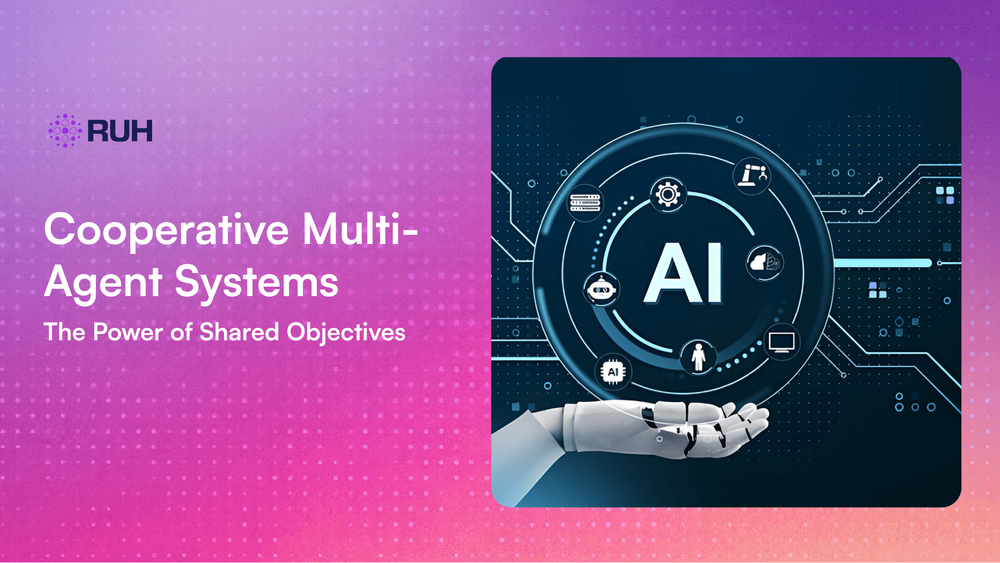
Cooperative multi-agent systems enable multiple AI agents to collaborate, share information, and coordinate actions to achieve common goals more efficiently. By aligning their objectives, these agents can solve complex problems faster, adapt to changing environments, and deliver more accurate outcomes than isolated systems. This cooperative approach enhances scalability, resilience, and performance across applications such as robotics, logistics, autonomous vehicles, finance, and AI-driven business workflows.
Understanding the distinction between competitive vs. collaborative multi-agent systems is crucial for organizations looking to implement these technologies effectively. While single-agent systems have their place, cooperative frameworks unlock unprecedented levels of collective intelligence.
Ready to see how it all works? Here’s a breakdown of the key elements:
- The Architecture of Cooperative Multi-Agent Systems
- Shared Objectives Framework: How Agents Align Goals
- Communication and Coordination Mechanisms
- Applications in Finance: Transforming Trading and Risk Management
- Healthcare Applications: Enhancing Patient Care Through Coordination
- Supply Chain Management: Optimizing Complex Networks
- Technical Challenges and Implementation Considerations
- Emerging Trends and Future Directions
- Strategic Implementation Roadmap for Organizations
- Conclusion: Harnessing Collective Intelligence for Competitive Advantage
- Frequently Asked Questions (FAQ)
The Architecture of Cooperative Multi-Agent Systems
The foundation of successful multi-agent collaboration rests on sophisticated architectural principles that balance individual autonomy with collective intelligence. According to research published by ACM, multi-agent cooperative decision-making techniques are widely applicable in real-world scenarios such as autonomous driving, drone navigation, disaster rescue, and simulated military applications.
Core Components and Design Principles
Modern cooperative systems require fundamental elements that allow AI agents to work efficiently together while maintaining their autonomy. These systems must navigate the delicate balance between independent decision-making and alignment to shared objectives—a challenge that distinguishes hierarchical agent systems from their cooperative counterparts.
Agent Autonomy vs. Collective Goals: The tension between individual agent capabilities and team objectives forms the cornerstone of cooperative design. Unlike competitive multi-agent systems, cooperative frameworks prioritize collective success over individual optimization. Research from IEEE on cooperative and competitive multi-agent systems demonstrates that agents with autonomy generate complex interactions through correlation and coordination, manifested as cooperative behavior.
Communication & Information Sharing: Seamless data exchange protocols enable agents to maintain situational awareness and coordinate effectively. The ACM International Conference on Autonomous Agents and Multiagent Systems (AAMAS), the largest and most influential conference in this field, brings together researchers exploring three communication paradigms: cooperative information sharing to achieve common goals, debate-based interactions, and role-specific collaboration.
Scalability: Systems must perform efficiently at enterprise scale. Gartner projects that multiagent systems will be among the top strategic technology trends for 2026, with the research firm identifying them as giving organizations a practical way to automate complex business processes and create new ways for people and AI agents to work together.
Shared Objectives Framework: How Agents Align Goals
The Shared Objectives Framework explains how multiple AI agents coordinate and make decisions toward unified outcomes. According to research from IEEE, agents with autonomy generate complex interactions through correlation and coordination, manifested as cooperative behavior in pursuit of shared goals.
Mathematical Formulation of Shared Utility Functions
Defining a common utility function quantifies collective benefits and guides agent decisions. This mathematical foundation ensures every agent's actions contribute to overall system goals, even when they operate in different environments or possess different capabilities. Recent advances in multi-agent AI collaboration for 2025 demonstrate how sophisticated utility functions enable unprecedented coordination.
Dynamic Objective Adaptation
Agents must adjust goals in response to changing environments or tasks. This adaptability distinguishes modern cooperative systems from rigid, rule-based automation. Research published in Frontiers in Robotics and AI demonstrates that multi-agent cooperative recurrent policy optimization can significantly improve information sharing between agents in partially observable environments.
Communication and Coordination Mechanisms
Effective communication enables collaboration, conflict resolution, and efficient task execution—especially in distributed, real-time, or resource-constrained environments. For organizations implementing these systems, understanding AI orchestration for multi-agent workflows becomes essential.
Message-Passing Architectures and Protocols
Agents communicate directly using structured messages, following defined protocols for reliability and clarity. This direct approach contrasts with indirect coordination methods and forms the backbone of modern LLM-based multi-agent systems, according to research published in ACM Transactions on Software Engineering and Methodology.
Negotiation Frameworks
Agents negotiate resources, tasks, and priorities to resolve conflicts and optimize collective outcomes. Research from IJCAI 2024 shows that long-term experience enables agents to develop the ability to identify non-cooperative neighbors and exhibit preferences for interaction with cooperative ones, leading to enhanced group cooperation.
Applications in Finance: Transforming Trading and Risk Management
The financial services sector has emerged as a leading adopter of cooperative multi-agent systems, driven by the need for speed, accuracy, and sophisticated decision-making. Organizations implementing AI employees in financial services are discovering unprecedented competitive advantages.
Algorithmic Trading with Cooperative Agents
JPMorgan Chase's LLM Suite multi-agent platform exemplifies this in practice, deploying multiple AI agents where each analyzes different market indicators including macroeconomics, sector trends, and company data, then combining them to deliver comprehensive investment recommendations.
Portfolio Optimization Through Distributed Agent Coordination: Multiple agents analyze different asset classes, risk profiles, and market conditions simultaneously. Together, they adjust weights in real time to build optimal, diversified portfolios that balance risk and expected returns. ** Market-Making Strategies Using Cooperative Agent Networks**: Agents collaborate to manage bid-ask spreads, inventory levels, and dynamic pricing across multiple markets, reducing risk exposure while improving profitability.
Liquidity Management Across Multiple Trading Venues: Cooperative agents monitor liquidity across exchanges, dark pools, and OTC venues, routing orders intelligently to minimize slippage and access deeper liquidity pools.
Fraud Detection and Risk Assessment Systems
Cooperative AI agents significantly strengthen financial security by working together to detect fraud, assess risk, and ensure regulatory compliance. According to Deloitte research, multiagent systems can analyze diverse data sources including customer financial history, real-time market data, life events, and behavioral patterns to continuously tailor financial plans and investment strategies.
Multi-Layered Fraud Detection: Different agents monitor transactions, user behavior, device signals, and anomaly patterns simultaneously. By combining insights, they create multi-layered defense systems that catch suspicious activity earlier and with higher accuracy.
Credit Risk Assessment Using Distributed Data Analysis: Cooperative agents analyze credit history, spending behavior, income patterns, and external financial data across multiple sources, producing more reliable credit scores and reducing loan default risk.
Collaborative Robo-Advisory Platforms
Modern wealth management increasingly relies on specialized AI agents working together to deliver holistic financial strategies. This approach aligns with the principles of hybrid workforce models combining human and AI collaboration.
Personalized Investment Strategies: Different agents focus on risk profiling, market analysis, and asset selection. Their combined insights produce highly personalized portfolios tailored to each client's financial goals, risk tolerance, and timelines.
Tax Optimization Across Multiple Account Types: Specialized tax agents analyze taxable, tax-deferred, and tax-exempt accounts together to minimize liabilities through strategies like tax-loss harvesting and asset location optimization.
Healthcare Applications: Enhancing Patient Care Through Coordination
The healthcare sector presents unique challenges and opportunities for cooperative multi-agent systems, where coordination can literally save lives. Multi-agent cooperative decision-making has found widespread application in disaster rescue and autonomous systems, principles that translate directly to healthcare emergencies.
Distributed Diagnostic Systems
Multi-Modal Medical Imaging Analysis: Specialized agents process X-rays, MRIs, CT scans, and ultrasound images simultaneously for more precise interpretations, reducing diagnostic errors. Research from ACM on multi-agent systems demonstrates how these coordinated approaches improve accuracy.
Laboratory Result Interpretation: Coordinated agents analyze blood work, biomarkers, and pathology data to identify anomalies faster than traditional sequential analysis.
Differential Diagnosis via Agent Consensus: Multiple agents propose and compare diagnoses, converging on the most probable condition through collaborative reasoning.
Treatment Planning and Resource Allocation
Operating Room Scheduling: Cooperative agents balance surgeon availability, procedure duration, and patient priority to minimize downtime and delays.
Hospital Bed Management: Multi-department agents track admissions, discharges, and occupancy to allocate beds efficiently across the entire facility.
Emergency Response: Real-time agent collaboration routes ambulances, assigns staff, and prioritizes critical cases for faster intervention.
Personalized Medicine and Drug Discovery
Genomic Data Analysis: Distributed agent networks rapidly process large-scale genomic datasets to identify biomarkers and personalize treatment plans.
Clinical Trial Matching: Cooperative recommendation agents match patients to suitable trials based on medical history, genetics, and eligibility criteria.
Drug-Drug Interaction Prediction: Specialized agents simulate molecular interactions and flag potential risks early in development, accelerating the path to safe therapeutics.
Supply Chain Management: Optimizing Complex Networks
Supply chain optimization represents one of the most mature application areas for cooperative multi-agent systems, where coordination directly impacts operational efficiency and profitability.
Demand Forecasting and Inventory Optimization
Multi-Echelon Inventory Management: Agents synchronize stock levels across plants, warehouses, and retail nodes, balancing upstream and downstream inventory to cut holding costs and prevent bottlenecks.
Collaborative Demand Sensing: Agents gather real-time signals from sales, promotions, and market shifts, sharing them instantly across partners to improve near-term forecast accuracy.
Safety Stock Optimization: Agents jointly evaluate lead times, demand variability, and supplier reliability, adjusting safety stock buffers dynamically to minimize uncertainty and risk.
Logistics & Transportation Coordination
Fleet Management with Cooperative Routing: Multiple routing agents share traffic, load, and route data to dynamically optimize fleet paths, reducing fuel usage and avoiding bottlenecks. ** Warehouse Automation Through Coordinated Robotics**: Robotic agents handle picking, sorting, and storage with synchronized movements to maximize space utilization and reduce processing time.
Last-Mile Delivery Optimization: Local delivery agents coordinate drop-off sequencing, micro-fulfillment zones, and real-time rerouting for faster, more reliable deliveries.
Supplier Relationship & Procurement Management
Automated Procurement Negotiation: Agents simulate competitive bids, negotiate pricing and terms, and shorten sourcing cycles with real-time multi-party negotiation.
Supplier Risk Assessment: Monitoring agents track financial, operational, geopolitical, and compliance signals across sources to flag high-risk suppliers early.
Sustainable Sourcing Optimization: Eco-agents optimize supplier selection based on carbon impact, material sustainability, and regulatory ESG goals.
Technical Challenges and Implementation Considerations
Scalability and Performance Optimization
McKinsey research indicates that fewer than 10% of vertical AI use cases reach production, with technical debt and organizational silos remaining major barriers. Despite this, McKinsey's latest survey shows 88% of organizations regularly use AI, with 23% scaling agentic AI systems. ** Computational Complexity Management**: Large agent populations increase processing load. Efficient algorithms, task partitioning, and hierarchical agent structures help maintain throughput.
Network Bandwidth Requirements: Optimizing communication protocols, compressing payloads, and using event-driven messaging reduce bandwidth usage as agent populations grow.
Cloud vs. Edge Deployment Architectures: Cloud offers scalability and centralized coordination, while edge reduces latency and bandwidth use. Hybrid models combine global intelligence with local responsiveness.
Understanding AI employee ROI metrics beyond cost savings becomes essential when evaluating deployment strategies. McKinsey reports that while 78% of companies use generative AI, most have yet to see material bottom-line impact—what they call the "Gen AI paradox."
Security, Privacy, and Trust in Multi-Agent Systems
Authentication & Authorization Between Agents: Each agent's identity must be verified and access rights enforced so only trusted agents can exchange data or perform actions.
Data Privacy in Collaborative Learning: Techniques like federated learning and differential privacy allow agents to learn from shared insights without exposing sensitive data.
Byzantine Fault Tolerance: Protects systems from malicious or faulty agents by enabling consensus even when some agents behave unpredictably or deceptively. Gartner warns that by 2028, 25% of enterprise breaches will be traced back to AI agent abuse from both external and internal actors.
Integration with Legacy Systems
Organizations must carefully plan adoption to ensure smooth interaction with existing infrastructure. Following an AI employee deployment blueprint can streamline this process.
API Design for Agent-to-System Communication: Building robust APIs allows agents to access and update legacy system data securely and efficiently.
Gradual Migration Strategies: Moving incrementally from monolithic systems to agent-based workflows minimizes downtime and risk.
Emerging Trends and Future Directions
Reinforcement Learning and Self-Organizing Agents
Reviews of cooperative Multi-Agent Reinforcement Learning published by IJCAI highlight the shift from traditional closed settings to dynamic open environments, where agents must adapt to evolving scenarios.
Multi-agent reinforcement learning for complex task coordination enables agents to learn optimal cooperation strategies through experience.
Emergent behavior from simple cooperation rules demonstrates how complex collective intelligence can arise from basic interaction protocols.
Transfer learning across agent populations allows knowledge gained in one domain to accelerate learning in related areas.
Human-Agent Collaboration Models
The future of work involves seamless integration between human decision-makers and agent systems. McKinsey emphasizes that organizations must begin reimagining IT architectures around an agent-first model where systems are natively designed for machine interaction rather than human navigation.
Mixed-initiative systems allow humans and agents to share control, with each contributing their unique strengths.
Explainable AI for agent decision transparency ensures humans can understand and trust agent recommendations.
This evolution aligns with emerging AI orchestration as a strategic imperative for enterprises in 2025.
Cross-Domain Applications and Convergence
Smart city infrastructure with coordinated agent networks optimizes traffic flow, energy distribution, and public services.
Energy grid optimization through distributed agent control balances supply and demand across complex power networks.
Autonomous vehicle coordination for traffic management reduces congestion and improves safety through cooperative driving strategies.
Strategic Implementation Roadmap for Organizations
Assessment and Readiness Evaluation
Organizations must conduct thorough business process analysis for agent system opportunities, calculating ROI frameworks and assessing technical infrastructure gaps. This evaluation should identify organizational capability requirements and risk mitigation strategies.
Pilot Projects and Proof-of-Concept Development
Deloitte recommends focusing on a small number of high-impact use cases, with Gartner advising organizations to start by using AI agents when decisions are needed—logical first steps for building organizational momentum. Gartner predicts that by the end of 2026, 40% of enterprise applications will include integrated task-specific agents, up from less than 5% today.
Successful pilots require clearly defined success metrics, stakeholder engagement, and systematic feedback collection. Organizations can leverage resources available through Ruh.ai's blog for implementation guidance.
Best Practices for Long-Term Success
Continuous monitoring and performance optimization ensures systems adapt to changing business needs.
Building internal expertise and centers of excellence creates sustainable competitive advantages.
Establishing governance frameworks for agent decision-making maintains alignment with organizational values and regulatory requirements.
Conclusion: Harnessing Collective Intelligence for Competitive Advantage
Cooperative multi-agent systems mark a fundamental shift from isolated automation to coordinated intelligence, unlocking unprecedented levels of efficiency, adaptability, and problem-solving across finance, healthcare, and supply chain domains. McKinsey argues that the solution to achieving enterprise transformation isn't more copilots or chatbots—it's autonomous AI agents capable of reengineering core business processes.
Organizations that embrace these systems will gain measurable advantages in operational efficiency, decision-making quality, and innovation capacity. The convergence of proven applications, technical maturity, and organizational readiness makes this the ideal time for strategic investment.
The future belongs to organizations that can effectively orchestrate intelligent, autonomous agents toward shared goals. Whether you're exploring single-agent vs multi-agent systems or planning comprehensive multi-agent AI collaboration strategies for 2025, the path forward requires decisive action and thoughtful implementation.
To learn more about how cooperative multi-agent systems can transform your organization,visit Ruh.ai or contact our team to discuss your specific needs. For organizations looking to deploy AI SDRs and sales automation, explore our AI SDR solution designed for modern go-to-market teams.
Frequently Asked Questions (FAQ)
What are cooperative multi-agent systems?
Ans: Cooperative multi-agent systems consist of multiple intelligent agents working together toward shared objectives, enabling complex problem-solving and coordinated decision-making that surpasses what individual agents can achieve. The International Conference on Autonomous Agents and Multiagent Systems (AAMAS) is the premier venue for research in this field.
How do shared objectives enhance system performance?
Ans: By aligning goals, agents can optimize resource allocation, reduce redundancies, and improve efficiency, adaptability, and overall outcomes across operations. This coordination creates synergies impossible in single-agent systems.
Which industries benefit most from cooperative multi-agent systems?
Ans: Key sectors include finance, healthcare, logistics, and supply chain management, where coordinated actions improve forecasting, resource management, and operational efficiency. However, applications span virtually every industry facing complex coordination challenges.
What technical challenges exist in implementing these systems?
Ans: Challenges include designing communication protocols, ensuring data consistency, managing conflict resolution between agents, scaling to enterprise levels, and integrating with legacy systems while maintaining security and privacy.
How do organizations measure the impact of multi-agent cooperation?
Ans: Impact is assessed through operational efficiency gains, decision quality improvements, cost reduction, responsiveness to changing conditions, and the system's ability to handle complex tasks collaboratively that were previously impossible or impractical.
Why is now the right time to invest in multi-agent systems?
Ans: Advances in AI, proven business applications, increased organizational readiness, and the availability of robust platforms make the current landscape ideal for adopting cooperative agent technologies to gain competitive advantage before they become table stakes. McKinsey's 2025 AI research shows that while adoption is widespread, the organizations scaling these systems effectively are seeing significant competitive advantages.